
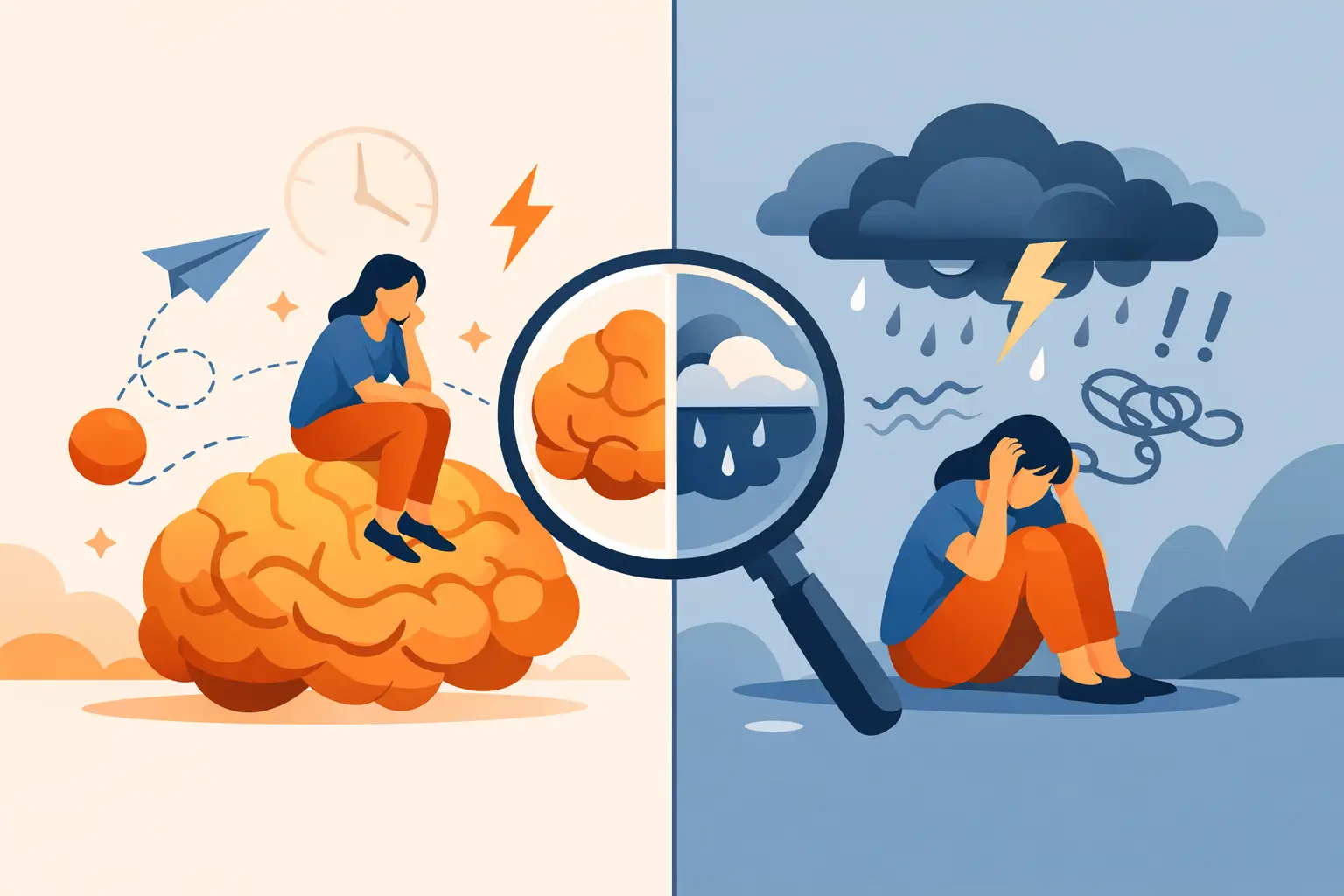
A full inbox, an overdue bill, a noisy café and a difficult conversation can all leave a person distracted, restless and unable to settle. This is why ADHD or anxiety symptoms can be so difficult to tell apart, particularly in adulthood. The outward behaviour may look similar, but the internal experience, developmental history and support needs can be quite different.
For some people, the question is not ADHD or anxiety. Both can be present, each intensifying the other. A thoughtful assessment looks beyond a checklist of symptoms to understand the pattern: when it began, what triggers it, how it affects daily life, and what helps the nervous system regain balance.
Why ADHD and anxiety can look so similar
ADHD is a neurodevelopmental condition that can affect attention regulation, impulse control, activity levels, working memory and organisation. Anxiety involves a heightened threat response, often expressed through persistent worry, physical tension, avoidance or fear of uncertainty. Both can interfere with focus, sleep, relationships and work.
For example, a person with ADHD may struggle to start an important task because it feels boring, complex or overwhelming. A person with anxiety may delay the same task because they fear getting it wrong. From the outside, both may appear to be procrastinating. Yet the thoughts, body sensations and treatment approach may differ.
Similarly, someone with ADHD may interrupt because a thought feels urgent and may disappear from working memory. Someone with anxiety may interrupt because silence feels uncomfortable or they are worried they will not be heard. These distinctions matter because self-criticism based on the wrong explanation rarely creates change.
ADHD or anxiety symptoms: key differences to explore
A diagnosis cannot be made from a single symptom. However, several patterns can help clarify what may be occurring.
Attention and concentration
With ADHD, attention is often inconsistent rather than simply absent. A person may find it very hard to concentrate on routine administration but become deeply absorbed in an interesting project, conversation or hobby. Distractibility can occur even when they feel calm, safe and motivated to focus.
With anxiety, concentration commonly narrows around threat. The mind may be occupied by worries, worst-case scenarios or repeated mental checking. Focus can improve when the source of worry reduces, reassurance is available, or the person feels more secure.
Of course, anxiety can develop after years of ADHD-related difficulties. Repeatedly missing deadlines, losing items or feeling behind others can create a strong expectation that something will go wrong. In this situation, both attention regulation and anxiety deserve care.
Restlessness and physical activation
ADHD-related restlessness may feel like an internal motor: fidgeting, pacing, talking quickly, changing tasks or needing stimulation to stay engaged. It is not always obvious. Many adults, especially women and people who have learned to mask, experience restlessness internally as a busy, constantly shifting mind.
Anxiety-related restlessness is more likely to be paired with physical signs of alarm, such as a racing heart, tight chest, shallow breathing, nausea, sweating or muscle tension. The body may be preparing for danger even when no immediate danger is present.
The distinction is not absolute. Poor sleep, caffeine, hormonal changes, trauma, burnout and chronic stress can all heighten nervous system activation. This is why a whole-person approach is more useful than treating one behaviour in isolation.
Organisation, memory and follow-through
Adults with ADHD may genuinely intend to act but struggle with the sequence between intention and completion. They may lose track of time, forget appointments, misplace everyday items, underestimate how long a task will take or feel paralysed by too many steps. These patterns often have roots in childhood, although they may become more disruptive as adult responsibilities increase.
Anxiety can also lead to forgetfulness and disorganisation, particularly when worry consumes mental bandwidth. The difference may be that these difficulties are most pronounced during periods of high stress or around particular feared situations. Perfectionism can also create a cycle in which a person spends so long trying to do something flawlessly that they cannot finish it.
Impulsivity, avoidance and emotional regulation
ADHD can involve speaking or acting before there is time to pause, making quick decisions, spending impulsively, or reacting intensely to frustration. Emotional regulation difficulties are common, although they are not unique to ADHD. A person may feel emotions quickly and strongly, then regret their response once the intensity has passed.
Anxiety more commonly drives avoidance. This might mean putting off phone calls, declining invitations, over-preparing, seeking repeated reassurance or staying within a very narrow comfort zone. Yet avoidance and impulsivity can coexist. Someone may avoid a difficult task for weeks, then rush through it under pressure.
The role of childhood history and life context
One of the most useful questions in an ADHD assessment is whether relevant patterns were present during childhood. ADHD begins in childhood, though many people are not recognised until adulthood. They may have been labelled dreamy, careless, talkative, disorganised or capable but inconsistent. Others achieved highly by relying on anxiety, perfectionism and considerable effort.
Anxiety can also begin early, but it may emerge or intensify after a stressful period, health concern, relationship difficulty, workplace pressure or major life transition. A clinician will explore timing, family history, school experiences, trauma exposure, sleep, substance use, medical factors and current demands.
This context protects against overly simple conclusions. A person who cannot concentrate after months of poor sleep and workplace stress may need support for stress recovery before ADHD can be accurately understood. Equally, someone whose anxiety has been treated for years without sustained relief may benefit from exploring whether unrecognised ADHD is contributing to the cycle.
Why self-diagnosis has limits
Online information can be validating. It gives language to experiences that may have felt confusing or shameful for a long time. But short videos, symptom lists and screening questionnaires cannot account for the overlap between ADHD, anxiety, depression, trauma responses, autism, sleep disorders and physical health conditions.
A careful clinical process does not dismiss self-recognition. It takes it seriously and investigates it with curiosity. The aim is not to apply a label quickly, but to develop an accurate formulation that explains what is happening and identifies practical next steps.
For some adults, this may include a formal ADHD assessment through an appropriately qualified practitioner. For others, therapy may focus first on anxiety management, emotional regulation, sleep, boundaries or recovery from chronic stress. The right pathway depends on the individual.
Support that addresses the brain, body and daily life
Effective support for ADHD and anxiety is rarely just about trying harder. It involves understanding how attention, threat perception, habits, relationships and lifestyle conditions interact.
Psychological therapies such as cognitive behavioural therapy can help identify unhelpful thought patterns, reduce avoidance and build realistic coping strategies. Acceptance and commitment therapy can support people to act in line with their values even when discomfort is present. Interpersonal therapy may be helpful where relationship stress, communication patterns or role changes are affecting wellbeing.
For ADHD-related challenges, practical systems are often essential. External reminders, visible planning tools, task breakdown, environmental adjustments and routines designed around energy and attention patterns can reduce the load on working memory. The goal is not rigid productivity. It is to make everyday life more workable and less punishing.
Lifestyle factors are also clinically relevant. Sleep disruption can amplify impulsivity, emotional reactivity and anxious thinking. Regular movement can assist mood regulation and stress recovery. Nourishing food, manageable caffeine intake, periods of genuine rest and mindfulness-based practices can all support the nervous system. These are not substitutes for assessment or therapy, but they can strengthen the foundations for change.
At Keystone Therapy, this integrated perspective helps clients understand symptoms within the broader context of their brain, body, history and current life. Therapy can educate, empower and facilitate growth without reducing a person to a diagnosis.
When to seek professional support
Consider speaking with a qualified mental health professional if focus problems, worry, avoidance, restlessness or emotional intensity are affecting work, study, relationships, parenting, sleep or self-esteem. Support is especially worthwhile when you are relying on exhaustion, overwork or constant vigilance just to keep up.
If you are experiencing thoughts of harming yourself or feel unable to stay safe, seek urgent assistance through emergency services, a crisis support service, or your nearest emergency department.
You do not need to prove that your difficulties are severe enough before asking for help. A useful starting point is simply to notice the pattern with compassion: what happens, when it happens, what your body is doing, and what you have had to do to cope. That information can become the beginning of more accurate understanding and more sustainable care.