

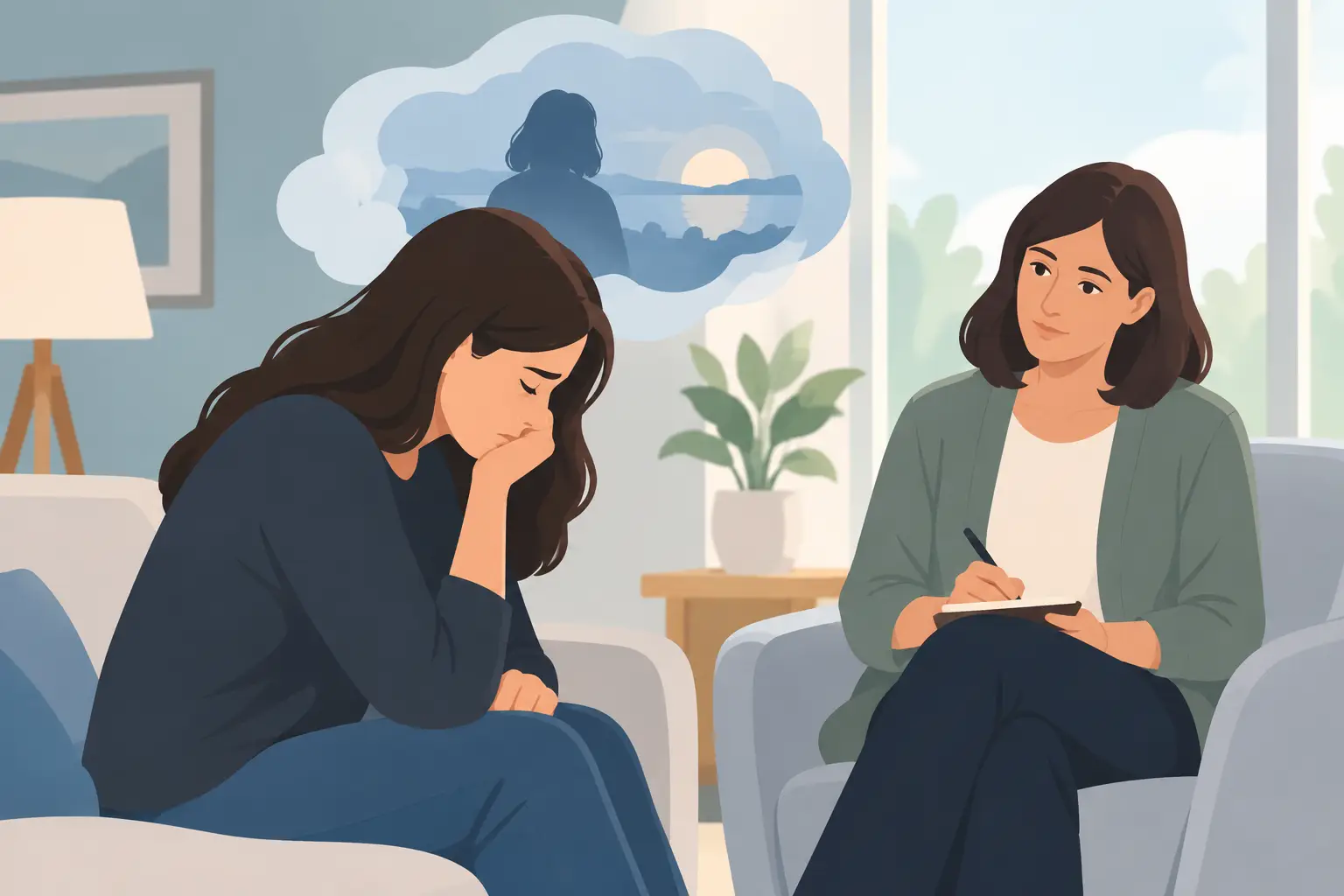
A person may return to work, answer messages and appear composed while privately feeling as though the loss has made life unrecognisable. This is one reason the question, when does grief require therapy, can be difficult to answer from the outside. Grief does not have a timetable, and needing support is not a sign that you are grieving incorrectly. Therapy can offer a structured place to understand what has changed, regulate overwhelming emotions and find a way to carry the relationship or loss forward.
Grief is a natural response to losing someone or something meaningful. It may follow a death, but also the end of a relationship, a major health change, infertility, job loss, estrangement, migration or a shift in identity. People can experience sadness, anger, numbness, relief, guilt, anxiety, exhaustion and physical symptoms, sometimes all in the same day. These responses can be painful without being pathological.
The more useful question is not whether your grief looks “normal”. It is whether it is becoming too difficult to live alongside, whether it is isolating you, and whether you have enough support to process it safely.
When does grief require therapy?
Grief may benefit from therapy at any point, including soon after a loss. You do not need to wait for a crisis or reach a particular milestone before speaking with a therapist. Some people seek support because they want a confidential space outside their family or friendship group. Others need practical strategies for sleep, panic, work stress or caring for children while grieving.
Therapy becomes particularly valuable when grief remains intensely disruptive, becomes more severe over time, or is accompanied by depression, trauma symptoms, substance use or thoughts of self-harm. This does not mean the person has failed to cope. It means their nervous system and daily life may need more care than informal support alone can provide.
For some people, a significant loss activates older wounds, attachment fears or previous experiences of trauma. A death may also involve distressing circumstances, such as suicide, violence, a sudden medical event or witnessing a loved one’s decline. In these situations, grief and trauma can become intertwined. A person may be mourning the individual while also reliving frightening images, avoiding reminders or feeling persistently unsafe.
Signs that additional support may help
There is no single sign that determines whether someone needs therapy. Patterns matter more than any one difficult day. It may be time to consider professional support if, for several weeks or months, you notice that grief is consistently affecting your capacity to function, connect or care for yourself.
Common signs include:
- persistent yearning or preoccupation that makes it hard to engage with work, relationships or everyday responsibilities
- intense guilt, self-blame or regret that feels fixed and cannot be softened by reassurance
- ongoing sleep disruption, appetite changes, panic, physical tension or exhaustion that is affecting health and functioning
- withdrawing from others, avoiding all reminders of the loss, or using alcohol, drugs or other behaviours to numb emotional pain
- feeling that life has no meaning, that you cannot imagine a future, or that you would be better off dead.
A major anniversary, birthday, holiday or legal process can temporarily intensify grief. A spike in emotion around these times does not necessarily indicate a problem. However, if distress feels unmanageable, or you find yourself becoming increasingly disconnected from life, therapy can provide stabilisation and perspective.
Understanding prolonged grief and depression
Persistent grief is not the same as depression, though the two can occur together. In grief, emotional pain may be strongly linked to the person who died or the loss itself. There may still be moments of warmth, connection or pleasure, even if they are brief. Depression often involves a more pervasive low mood, reduced interest, hopelessness and harsh beliefs about the self across many areas of life.
Some people develop prolonged grief disorder, a recognised mental health condition involving enduring and impairing grief symptoms after a bereavement. The timing and assessment criteria are specific, so it is not helpful to self-diagnose based on an article. What matters is recognising when longing, disbelief, avoidance or emotional pain remain so intense that life cannot begin to expand around the loss.
A qualified therapist can assess the broader picture. They will consider the nature of the loss, your cultural and family context, your support network, your mental health history, your physical health and the demands currently placed on you. Good care avoids reducing a deeply human experience to a checklist.
Grief can affect the brain and body
Loss is not only an emotional event. It can affect attention, memory, motivation, sleep, appetite and the body’s stress response. Many grieving people describe brain fog, heightened irritability, a tight chest or an inability to settle at night. These reactions can be especially concerning when they persist or when they interact with pre-existing anxiety, ADHD, autism, depression or chronic health conditions.
A brain-based, person-centred approach recognises that emotional regulation is shaped by more than insight. Sleep, nourishment, movement, social safety, routine and the capacity to rest all influence how the nervous system copes with stress. These foundations will not remove grief, nor should they be presented as a cure. They can, however, create enough stability for a person to process painful emotions without becoming overwhelmed by them.
What grief therapy can offer
Grief therapy is not designed to make you “move on” or forget the person you loved. Effective therapy helps you make meaning of the loss while rebuilding a life that can hold both love and pain. The focus will differ depending on your needs.
For someone experiencing acute grief, sessions may centre on emotional containment, sleep, routines and support planning. For someone caught in guilt or rumination, cognitive behavioural strategies may help identify unhelpful thought patterns while respecting the reality of the loss. Acceptance and Commitment Therapy can support people to make room for difficult feelings and reconnect with values that still matter. Interpersonal therapy may be useful where grief has altered relationships, roles or a sense of belonging.
Where trauma is present, therapy may first focus on safety and nervous-system regulation before exploring the details of the loss. This pacing matters. Being asked to revisit painful experiences before you have adequate coping resources can feel destabilising. A skilled therapist works collaboratively, helping you decide what feels manageable and when.
Therapy can also help with the relational side of grief. Couples may grieve differently, with one person wanting to talk often and another becoming quiet or task-focused. Neither response is automatically wrong, but differences can create distance. Support can facilitate more compassionate communication at a time when both people may feel depleted.
You do not need to prove your grief is serious enough
Many people delay therapy because they compare their loss to someone else’s or believe they should manage alone. Others worry that attending therapy means they are not strong, grateful or resilient. In practice, seeking help is often a practical act of care. It gives you time to understand your response before exhaustion, isolation or anxiety become entrenched.
It also depends on the support already around you. A person with close family, flexible work and a stable routine may still want therapy, but may need it differently from someone who is grieving while navigating financial pressure, caregiving, conflict or limited social support. There is no prize for carrying more than your system can sustain.
If you are unsure, consider a first appointment as an assessment rather than a commitment to long-term therapy. You can discuss what has happened, what feels hardest and what kind of support might be useful. A thoughtful clinician should educate, empower and engage you in decisions about your care.
When urgent help is needed
Grief warrants immediate support if you are thinking about ending your life, making plans to harm yourself, unable to keep yourself safe, or experiencing severe distress that feels impossible to manage alone. In Australia, call Triple Zero (000) in an emergency. You can also contact Lifeline on 13 11 14 for crisis support, or present to your nearest emergency department.
If you are concerned about someone else, take their words seriously. Stay with them where possible, help them contact support and do not assume that mentioning suicide will make the situation worse.
Grief changes over time, but it does not always become easier in a straight line. The aim of therapy is not to erase a bond or rush healing. It is to help you regain steadiness, connection and choice, so the loss is part of your story without having to define every part of your life.