
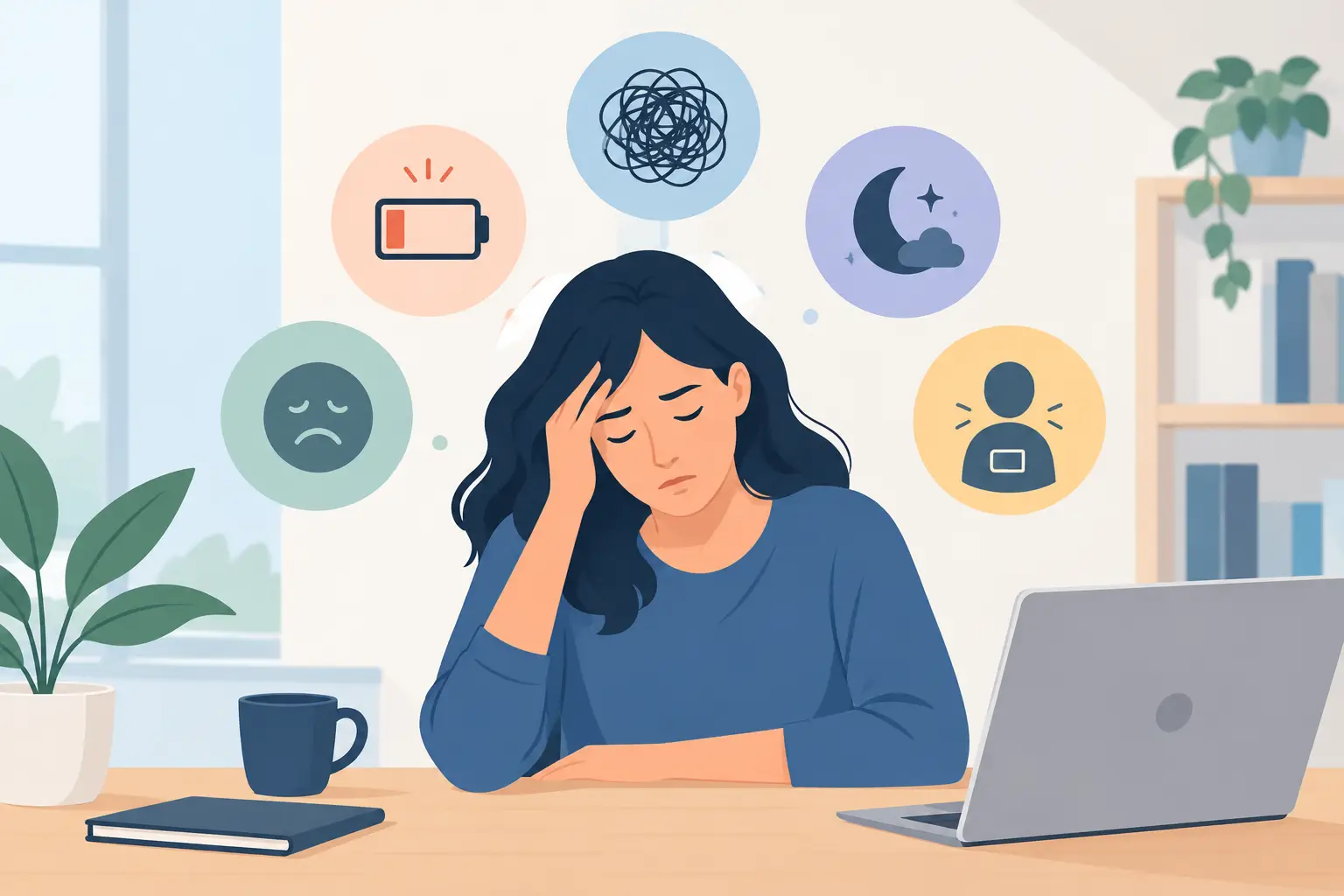
Burnout is not always dramatic. It can begin with the feeling that ordinary tasks require disproportionate effort: replying to a message, making a decision, preparing dinner, or joining a conversation you would normally enjoy. Recognising the top signs of emotional burnout early can help you respond before exhaustion becomes more deeply entrenched.
Emotional burnout is more than being busy or having a difficult week. It is a state of prolonged psychological and physiological depletion, often arising when demands repeatedly exceed a person’s capacity to recover. Work pressure can contribute, but so can caring responsibilities, relationship strain, chronic anxiety, financial stress, masking neurodivergent traits, poor sleep, or the cumulative weight of trying to hold everything together.
From a brain-based perspective, sustained stress can keep the nervous system in a heightened state of threat monitoring. Over time, this affects concentration, emotional regulation, sleep, motivation, and the ability to experience pleasure. Burnout is not a personal failure. It is often a signal that your current load, supports, and recovery opportunities are out of balance.
Top signs of emotional burnout
The presentation of burnout differs from person to person. Some people become visibly overwhelmed; others continue to perform well at work or home while feeling increasingly disconnected inside. The following signs are worth taking seriously, particularly when they persist for weeks or begin affecting daily functioning.
1. Exhaustion that rest does not resolve
Physical tiredness is common after a demanding period. Burnout-related exhaustion feels different because a weekend, an early night, or a quiet day may not restore you in the way it once did. You may wake up already depleted, struggle to initiate basic tasks, or feel that your energy disappears unusually quickly.
This does not mean sleep is unimportant. Sleep is central to emotional regulation and cognitive recovery. However, when the nervous system has been under sustained pressure, sleep alone may not address the broader pattern of overload.
2. Emotional numbness, irritability, or both
People often expect burnout to look like constant sadness or tears. Sometimes it does. Just as commonly, it appears as emotional flatness, detachment, impatience, or a shorter fuse than usual. You may feel less compassionate towards colleagues, family members, or yourself, then feel guilty about that reaction.
Numbness can be a protective response. When the brain perceives ongoing demands without enough safety or recovery, it may reduce emotional engagement to conserve resources. Irritability can reflect the same system operating with reduced capacity.
3. Reduced concentration and decision fatigue
If simple choices suddenly feel impossible, burnout may be part of the picture. You might reread emails without absorbing them, lose your train of thought, procrastinate on tasks you would normally manage, or become overwhelmed by competing priorities.
Stress hormones influence attention, memory, and executive functioning. For adults with ADHD, autism, anxiety, or existing sleep difficulties, this cognitive load may be especially noticeable. It is not laziness or a lack of discipline. It is useful information about the demands being placed on your brain.
4. Losing interest in things that usually matter
A key sign of emotional burnout is a gradual loss of connection with activities, people, or goals that previously felt meaningful. You may withdraw from friends, stop exercising, avoid hobbies, or go through the motions at work without a sense of purpose.
This can overlap with depression, and the distinction is not always clear without professional assessment. Burnout is often closely linked to a particular context of chronic demand, while depression may extend more broadly across life. Both deserve care, particularly if low mood, hopelessness, or loss of interest is persistent.
5. A growing sense of cynicism or helplessness
When effort has not produced relief for a long time, the mind can become increasingly negative or disengaged. You may think, “What is the point?” or assume that nothing will improve, even when practical options exist. In workplace burnout, this may show up as cynicism about colleagues, leadership, or the value of the work itself.
These thoughts are not proof that you are negative by nature. They can be signs that your coping system has been stretched beyond its limits. They are also a prompt to examine what is changeable, what needs support, and where boundaries have become difficult to maintain.
6. Physical stress symptoms become more frequent
The mind and body do not operate separately. Ongoing emotional strain may be accompanied by headaches, muscle tension, jaw clenching, digestive changes, frequent illness, appetite shifts, restlessness, or disrupted sleep. Some people notice a racing heart or shallow breathing; others feel slowed down and heavy.
These symptoms can have many causes, so it is wise not to assume they are “just stress”. A GP can help rule out medical contributors, particularly when symptoms are new, severe, or worsening. At the same time, attending to stress physiology can be a meaningful part of recovery.
7. You cannot switch off, even in quiet moments
Burnout does not always look like collapse. It can also look like relentless productivity, scrolling late into the night, overthinking, or feeling uneasy when you are not doing something useful. The body may be exhausted while the mind remains on alert.
This pattern can make rest feel surprisingly uncomfortable. A gradual approach is often more sustainable than forcing yourself into complete stillness. Short periods of movement, time outdoors, regular meals, a consistent wind-down routine, and manageable limits around work can help signal safety to the nervous system.
Why burnout can be difficult to recognise
Many capable people normalise exhaustion because they have learned to value productivity, reliability, or self-sufficiency. Others live with responsibilities that cannot simply be put aside. Parents, carers, health professionals, business owners, and people managing financial or family pressures may feel they have no permission to slow down.
There is also a difference between reducing demands and recovering from chronic stress. Taking leave can help, but if the underlying pattern includes perfectionism, people-pleasing, unclear boundaries, unresolved grief, workplace conflict, or a nervous system that remains in threat mode, symptoms can return quickly. Recovery usually requires both practical change and compassionate psychological support.
What helps when emotional burnout is building
The most helpful response depends on your circumstances. If you are in an acute period of stress, the immediate priority may be reducing non-essential demands and restoring basics such as sleep, nourishment, hydration, movement, and social connection. These are not superficial wellbeing tasks. They influence the brain and body systems involved in mood, attention, stress regulation, and resilience.
It can also help to make your load visible. Write down the ongoing demands you carry, including invisible emotional labour, then identify what can be delayed, delegated, simplified, or discussed. A boundary does not need to be confrontational to be effective. It might be leaving work on time twice a week, declining one commitment, asking a partner for specific support, or turning off notifications during a protected recovery period.
Therapy provides space to understand the patterns beneath burnout rather than simply trying to push through it. Approaches such as cognitive behavioural therapy, acceptance and commitment therapy, and interpersonal therapy can help people examine unhelpful beliefs about responsibility, develop emotional regulation skills, communicate needs, and reconnect with values. An integrative approach also considers sleep, exercise, nutrition, relationships, and the way your nervous system responds to ongoing stress.
Keystone Therapy supports adults and couples to understand these interconnected factors and facilitate sustainable change through evidence-based, person-centred care.
When to seek more urgent support
Burnout should not be managed alone when symptoms are severe or escalating. Speak with a GP or mental health professional if you are unable to function in daily life, have persistent low mood or anxiety, are relying more heavily on alcohol or other substances, or feel increasingly isolated. If you are having thoughts of harming yourself or do not feel safe, seek urgent crisis support or contact emergency services immediately.
You do not need to wait until you are completely depleted to ask for help. Noticing that life has become harder than it should be is reason enough to pause, seek support, and begin making room for recovery.