
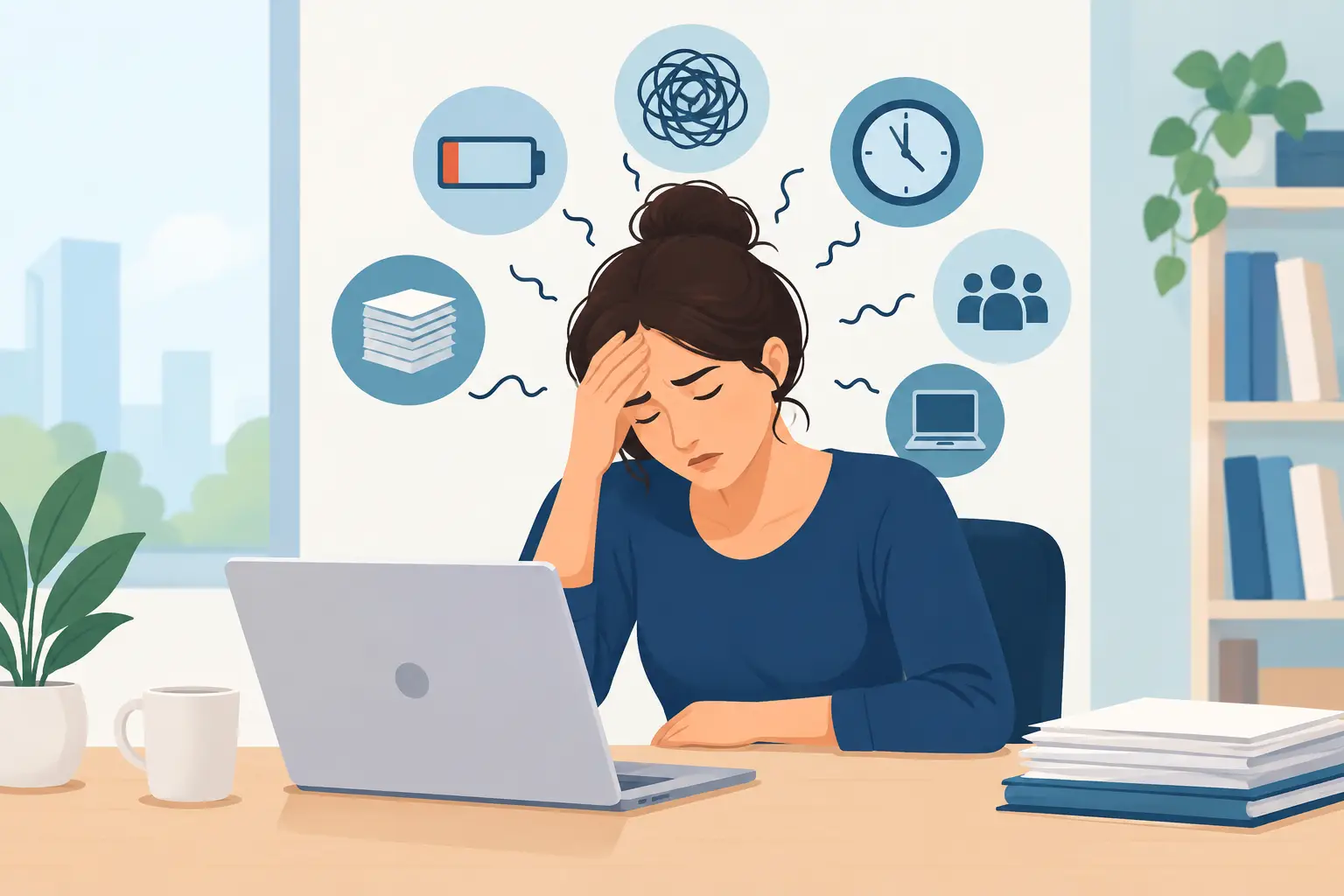
Burnout rarely begins with a dramatic collapse. More often, it arrives as a series of small changes: the email you cannot bring yourself to open, the sleep that no longer restores you, the growing sense that even simple decisions require too much effort. If you have been searching for the top signs burnout adults experience, it may be because your usual ways of coping are no longer working.
Burnout is not a personal failure or a sign that you are not resilient enough. It is a state of prolonged physical, emotional and cognitive depletion that can develop when ongoing demands exceed the resources available to meet them. Work is a common contributor, but caregiving, financial pressure, relationship strain, chronic illness, study, masking neurodivergent traits, and persistent uncertainty can all play a role.
From a brain-based perspective, burnout can be understood as a system that has spent too long in overdrive. The nervous system becomes organised around getting through the next demand rather than recovering, connecting and regulating. Recognising the pattern early can create room for meaningful change.
Top signs of burnout in adults
Burnout can look different from person to person. Some people become highly productive and emotionally detached; others withdraw, procrastinate or feel unable to begin. The key is not whether you match every sign, but whether there has been a persistent shift from how you usually think, feel, function and relate.
Exhaustion that rest does not resolve
A defining feature of burnout is exhaustion that goes beyond an ordinary tired week. You may sleep longer yet wake unrefreshed, or use weekends to recover enough to return to work on Monday without ever feeling genuinely restored.
This may include physical heaviness, frequent headaches, muscle tension, digestive changes, lowered immunity or a sense that your body is constantly braced. These symptoms deserve attention, particularly when they are new, persistent or worsening. Burnout can affect the body, but medical conditions can also produce fatigue, so a GP assessment may be appropriate.
Reduced concentration and mental capacity
When the brain is under sustained stress, attention and executive functioning often suffer. Tasks that once felt routine may take much longer. You might reread messages without absorbing them, lose your train of thought in conversations, forget appointments, or struggle to prioritise competing demands.
This is not laziness. Stress can narrow cognitive bandwidth, making planning, working memory and flexible problem-solving more difficult. For adults with ADHD, autism, anxiety or sleep difficulties, this decline may feel especially pronounced because existing regulation demands are already high.
Emotional numbness, irritability or cynicism
Burnout is often associated with feeling flat rather than visibly distressed. You may stop caring about outcomes that once mattered, feel disconnected from colleagues or loved ones, or approach daily responsibilities with resentment and dread.
For others, the emotional tone is irritability. Small interruptions feel intolerable, noise is harder to manage, and you may react more sharply than intended. A short temper is not always a sign of burnout, but when it sits alongside exhaustion and withdrawal, it can indicate that your capacity is depleted.
Motivation disappears, even for meaningful things
A person experiencing burnout may still know what needs to be done but feel unable to initiate it. This can be confusing and shame-inducing, particularly for people who see themselves as capable, reliable or driven.
The loss of motivation can extend beyond employment. Exercise, hobbies, social contact, cooking and basic self-care may begin to feel like more demands rather than sources of nourishment. It is worth distinguishing this from a brief period of low energy. Burnout is more likely when the pattern persists and begins to affect several areas of life.
Sleep becomes disrupted
Sleep and burnout influence each other. Some people lie awake with a racing mind, mentally replaying conversations or preparing for tomorrow’s demands. Others fall asleep quickly but wake early, sleep lightly, or need excessive sleep without feeling rested.
Poor sleep reduces emotional regulation and stress tolerance the following day, which can reinforce the cycle. While improving sleep routines can help, persistent insomnia, nightmares or significant daytime fatigue may require more structured support.
You withdraw from connection and support
When capacity is low, people often reduce contact with others. Cancelling plans can offer temporary relief, but ongoing isolation may remove the relationships that help regulate stress and provide perspective.
Withdrawal can also show up at home. You may be physically present but unable to engage, or find ordinary conversation draining. In couples, burnout can be misread as a loss of care or commitment when it may instead reflect a nervous system with little energy left for connection.
Burnout, stress and depression are not identical
Stress, burnout, anxiety and depression can overlap, and it is not always useful to force a neat label too early. Stress may involve feeling overwhelmed but still engaged and hopeful that things will improve once a deadline passes. Burnout more often includes depletion, detachment and a reduced sense of effectiveness.
Depression can also involve low energy, sleep changes, concentration difficulties and withdrawal. However, it may include persistent low mood, hopelessness, loss of pleasure, guilt, changes in appetite, or thoughts of death or self-harm. Burnout can develop alongside depression, rather than being an alternative to it.
A careful therapeutic assessment considers the full picture: your symptoms, health, sleep, relationships, work conditions, neurodevelopmental profile, coping history and current supports. The aim is not simply to name the problem, but to understand what is maintaining it and what will genuinely help.
Why pushing through can make burnout worse
Many adults respond to early burnout by increasing effort. They work later, abandon breaks, reduce movement, rely on caffeine, and tell themselves they will recover once this busy period ends. Sometimes a short-term push is unavoidable. The problem is when short-term survival becomes the ongoing pattern.
The nervous system needs signals of safety and recovery to move out of sustained activation. Those signals are not limited to meditation or time off, although both can be useful. They can include regular meals, consistent sleep and wake times, movement that is appropriate for your energy level, clearer boundaries, manageable workloads, supportive relationships and opportunities to experience competence without constant evaluation.
This is also where advice needs nuance. Taking a holiday may provide relief, but it may not resolve burnout if you return to the same unmanageable expectations, blurred boundaries or relational pressures. Equally, leaving a job is not always possible or necessary. Effective recovery often involves a combination of practical changes, emotional processing and skills for regulating stress differently.
What to do when you recognise the pattern
Begin by reducing self-blame. Notice what has changed, when it began, and which demands are consuming the most energy. A simple record of sleep, mood, workload, physical symptoms and recovery time can reveal patterns that are difficult to see while you are in them.
Next, consider one realistic adjustment rather than attempting a complete lifestyle overhaul. That may mean protecting a lunch break, discussing workload expectations, asking a family member for practical help, reducing non-essential commitments, or making an appointment with your GP. Small changes matter when they are repeated and supported.
Therapy can provide a structured space to examine the drivers of burnout without reducing the issue to individual coping alone. Approaches such as CBT, ACT and interpersonal therapy can help identify unhelpful pressure patterns, clarify values, strengthen boundaries and work with the thoughts and emotions that make rest feel unsafe or undeserved. A holistic approach also considers sleep, nutrition, movement, sensory needs and the body-based effects of chronic stress.
If you are experiencing hopelessness, feel unable to keep yourself safe, or have thoughts of suicide or self-harm, seek urgent support through emergency services, a crisis line, your GP, or the nearest emergency department.
Burnout asks for more than another productivity strategy. It asks you to take your internal signals seriously, make space for recovery, and build a life that does not require you to abandon yourself in order to keep functioning.