

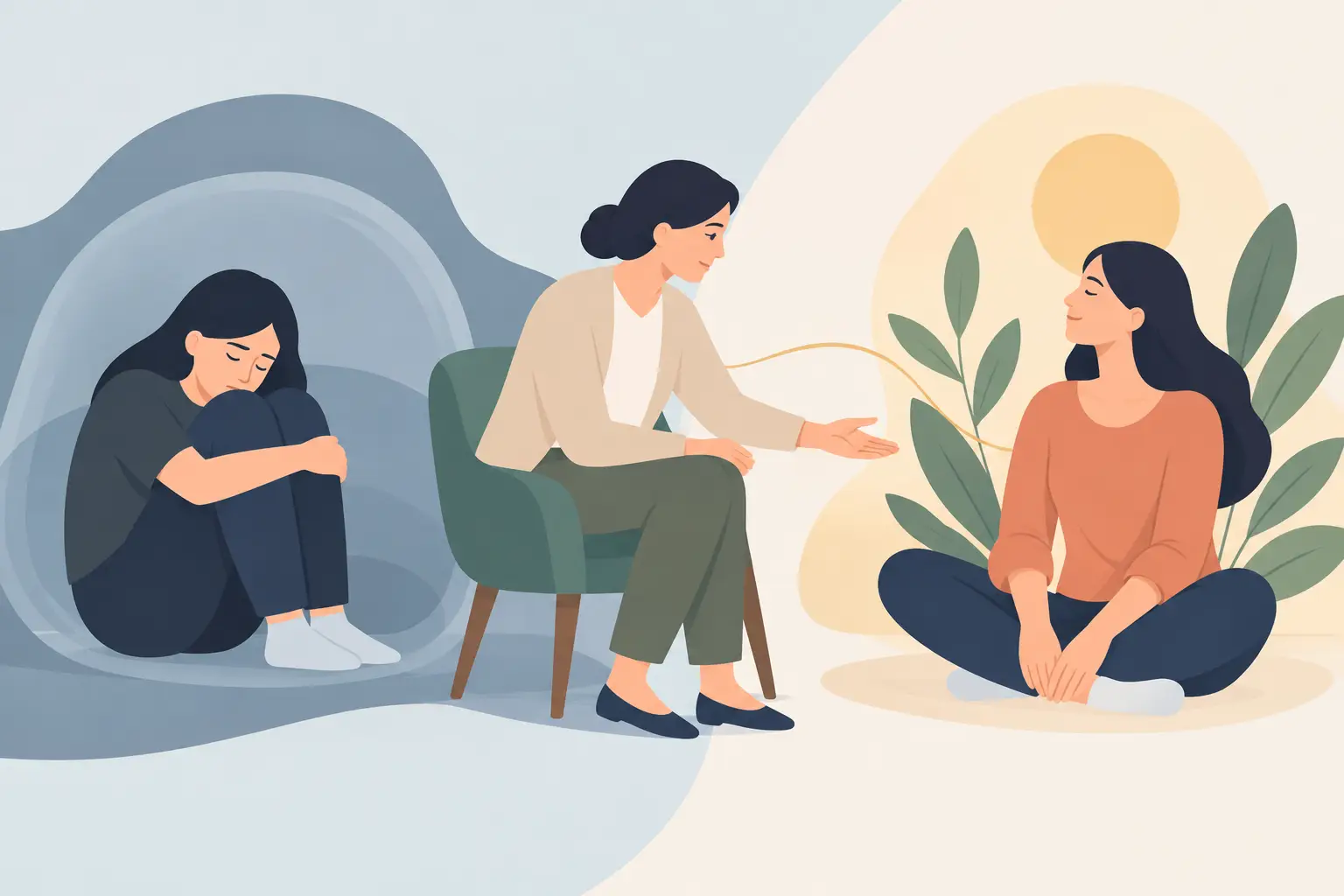
Emotional shutdown can look deceptively calm from the outside. You may go quiet in conflict, struggle to name what you feel, lose access to words, or feel detached from people and experiences that would usually matter to you. Therapy for emotional shutdown is not about forcing feelings to appear on demand. It is a structured way to understand why your mind and body have moved into protection, then gradually build the safety and skills needed for connection.
For many people, shutdown is followed by shame: Why could I not just speak up? Why do I feel nothing when I know this matters? These questions are understandable, but they can overlook the nervous system’s role. When the brain perceives threat, whether from present stress, relationship conflict, sensory overload or past experiences, it prioritises survival over reflection and communication.
Emotional shutdown is often a protective response
Emotional shutdown is not a formal diagnosis. It is a description of an experience that can involve numbness, withdrawal, dissociation, exhaustion, a blank mind, reduced speech, or an inability to make decisions. Some people feel physically heavy or frozen. Others stay busy, logical or agreeable while feeling internally distant.
This response can occur with anxiety, depression, trauma-related stress, burnout, chronic sleep disruption, autism, ADHD, grief, or prolonged relational strain. It may also emerge in situations where a person feels criticised, trapped, overwhelmed or unable to meet competing demands. The same behaviour can have different causes, which is why a thoughtful assessment matters.
From a brain-based perspective, shutdown may reflect a nervous system that has exceeded its capacity to cope. The brain continuously scans for cues of safety and danger. When stress is intense or ongoing, the systems that support flexible thinking, emotional language and social engagement can become less available. This is not an excuse for harmful behaviour, nor is it a personal failure. It is useful information about what your system has learned to do under pressure.
How therapy for emotional shutdown works
Effective therapy begins by slowing down the assumption that you should simply “open up”. Emotional expression is more sustainable when it is supported by safety, choice and regulation. A therapist can help you identify the specific pattern: what tends to happen before shutdown, how it feels in your body, what thoughts appear, what you do next, and what consequences keep the cycle going.
For example, a person may notice that a difficult conversation triggers a racing heart and tight chest. They then become silent, leave the room, and later feel guilty or misunderstood. Another person may not notice any physical activation at all, but experiences a foggy mind after a demanding week and withdraws from messages, work and family. Both patterns deserve care, but the therapeutic starting point may differ.
A person-centred approach recognises that you are the expert on your own experience. Therapy provides guidance and clinical structure without treating you as a problem to be fixed. Together, you can develop language for experiences that may previously have felt confusing, private or impossible to explain.
Regulation comes before deeper processing
When someone is significantly overwhelmed, insight alone is rarely enough. Therapy may first focus on practical ways to support nervous system regulation, such as noticing early warning signs, grounding attention in the present, using paced breathing, building sensory supports, and creating realistic recovery time after stress.
These are not one-size-fits-all techniques. Mindfulness, for instance, can be helpful for some people and uncomfortable for others, particularly if sitting still intensifies dissociation or distress. A therapist can adapt strategies to your needs, neurotype, health circumstances and daily responsibilities.
Sleep, nutrition, movement, alcohol use, pain and medical conditions can also affect emotional capacity. An integrative therapeutic approach considers these factors without reducing emotional distress to lifestyle choices. A walk, regular meals or improved sleep may increase resilience, but they do not erase the need to address grief, trauma, relationship patterns or workplace stress.
Understanding thoughts, beliefs and learned patterns
Cognitive behavioural therapy (CBT) can help examine the thoughts that accompany shutdown, such as “If I say what I feel, I will make things worse” or “My needs are too much.” These beliefs may have developed for understandable reasons, yet continue to limit connection in the present.
Acceptance and commitment therapy (ACT) offers another useful lens. Rather than fighting every difficult emotion, ACT helps people make room for internal experiences while choosing actions aligned with their values. Someone may still feel anxious during a conversation, for example, but learn to say, “I need ten minutes to settle, and I want to come back to this,” rather than disappearing from the interaction.
Where shutdown is connected to relationship distress, interpersonal therapy or couples work can support clearer communication and repair. The goal is not to demand immediate vulnerability from either partner. It is to create more predictable, respectful ways of recognising escalation, taking space and returning to difficult conversations.
What progress may look like
Recovery from emotional shutdown is rarely a straight line. At first, progress might mean noticing that you are beginning to shut down before you are completely disconnected. Later, it may mean asking for a pause, naming one feeling instead of none, or returning to a conversation sooner and with less self-criticism.
Over time, many people develop a wider window of tolerance: a greater ability to remain present with strong emotions without becoming overwhelmed, numb or reactive. This does not mean never needing space. Healthy regulation includes stepping back when needed. The difference is having choice, communicating that need where possible, and finding your way back.
For neurodivergent people, progress may also involve recognising that what looks like emotional withdrawal can be an overload response. Reducing sensory demands, clarifying expectations, allowing processing time and honouring recovery needs can be as clinically relevant as exploring emotional history. Good therapy does not pathologise difference. It helps you understand your individual nervous system and advocate for the conditions in which you function well.
When emotional shutdown needs prompt support
It is worth seeking professional help when shutdown is frequent, worsening, affecting work or relationships, or leaving you unable to manage daily life. Support is particularly important if you experience significant memory gaps, feel unreal or disconnected from your surroundings, use substances to cope, or have thoughts of harming yourself.
If you are in immediate danger or worried you may act on thoughts of self-harm, contact emergency services on 000 or attend your nearest emergency department. In less immediate but still difficult moments, speaking with a GP or qualified mental health professional can help you identify appropriate next steps.
Beginning with curiosity, not pressure
You do not need to arrive at therapy with a neat explanation of what is happening. “I go blank”, “I cannot talk when I am upset”, or “I feel far away from everyone” are meaningful places to begin. A skilled therapist can help educate, empower and facilitate growth at a pace that respects both your readiness and your goals.
At Keystone Therapy, this may involve integrating evidence-based psychotherapy with an understanding of brain function, emotional regulation and the lifestyle factors that influence wellbeing. Whether sessions occur in person or through telehealth, the work is collaborative: making sense of protective patterns, strengthening practical capacity, and creating more room for the relationships and life choices that matter to you.
Emotional shutdown may have once helped you get through something difficult. With compassionate, structured support, it does not have to remain the only response available when life feels too much.