

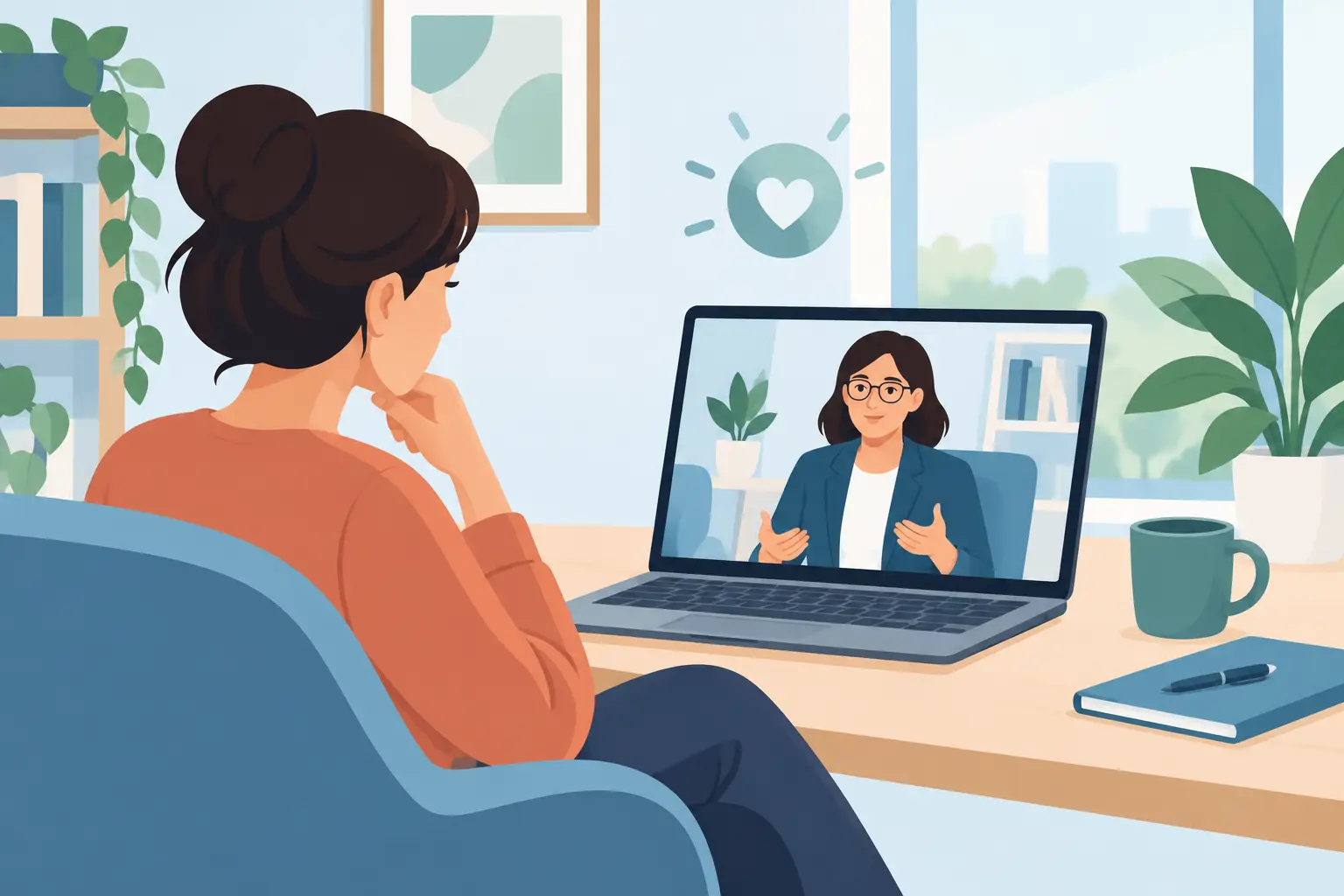
A missed appointment can be more than an empty hour in the diary. For someone managing anxiety, low mood, ADHD, chronic stress or a demanding family schedule, the travel, parking, waiting room and recovery time around therapy can become a genuine barrier to care. This online therapy effectiveness review considers what research and clinical practice can tell us about telehealth therapy, where it works well, and when another format may be more appropriate.
What “effective” means in therapy
Effectiveness is not simply whether a person feels better after one conversation. In mental health research, it may refer to meaningful reductions in symptoms, improved day-to-day functioning, stronger emotional regulation, better relationships, or progress towards personally chosen goals. A useful assessment also considers whether gains last beyond the end of therapy.
It helps to distinguish between a therapy model and its delivery method. Cognitive behavioural therapy (CBT), acceptance and commitment therapy (ACT), interpersonal psychotherapy (IPT) and other approaches can be delivered in a consulting room or through secure video. Online therapy is not a single treatment. It is a way of receiving treatment.
That distinction matters because a video appointment cannot compensate for therapy that lacks a clear formulation, appropriate pacing or a collaborative treatment plan. Equally, a skilled, attuned therapeutic process does not lose its value simply because client and therapist are not in the same physical room.
Online therapy effectiveness review: what the evidence suggests
Research over the past two decades has generally found that video-based psychotherapy can produce outcomes comparable with face-to-face therapy for many common concerns, particularly anxiety and depression. Findings are strongest where treatment is structured, regular and guided by a qualified clinician, rather than being limited to self-directed digital content.
For many people, the therapeutic relationship also develops well online. Trust, warmth, collaboration and the sense that a therapist understands your experience remain central predictors of progress. These qualities can be established through a screen when the therapist is attentive, the technology is reliable and the client has enough privacy to speak freely.
However, comparable does not mean identical. Research findings describe average outcomes across groups, while therapy happens one person at a time. Some clients feel calmer and more candid in their own home. Others find that being physically present helps them concentrate, feel contained or separate therapy from the pressures of daily life.
The quality of the online environment can shape the result. A client trying to discuss a difficult relationship while sitting in a car, sharing a house with others, or monitoring whether someone can overhear them is not receiving the same conditions as someone in a quiet, private space. Technology is part of the therapeutic setting, not a minor administrative detail.
Why access can improve outcomes
Telehealth can reduce practical obstacles that otherwise interrupt care. This may be particularly valuable for people living outside central Perth, those with mobility or chronic health concerns, shift workers, parents and carers, or clients whose anxiety makes leaving home feel overwhelming. Consistent attendance gives therapeutic work the continuity it needs.
Online sessions can also support the transfer of skills into real life. A person may practise grounding techniques in the room where they usually become overwhelmed, review their sleep routine from their own home, or plan a more workable response to workplace stress while sitting at their desk. The setting can provide useful clinical information about routines, sensory demands and environmental triggers.
From a brain-based perspective, repeated experiences of safety, reflection and manageable behavioural change help build new patterns over time. This is not about finding a quick neurological fix. It is about creating conditions in which the nervous system can learn that difficult thoughts, emotions and sensations can be noticed and responded to differently.
When face-to-face care, or a hybrid model, may suit better
Online therapy is not the best option for every circumstance. If someone is experiencing acute safety concerns, severe disorganisation, frequent dissociation, active psychosis, or a significant risk of harm to themselves or another person, a more immediate and local level of support may be needed. A clinician should assess risk carefully and discuss an appropriate safety plan.
Privacy concerns also deserve serious attention. Telehealth may not be suitable when a person cannot speak safely at home, including in situations involving coercive control or family violence. In these cases, the question is not whether online therapy is effective in theory, but whether the environment allows for genuine safety and confidentiality.
Some clients with complex trauma, intense emotional states or substantial concentration difficulties prefer the grounding effect of an in-person appointment. That preference is valid. Others benefit from a hybrid approach, using online sessions for continuity and attending in person at key stages of therapy. The right format can change as circumstances and therapeutic needs change.
What makes telehealth therapy clinically meaningful
The medium matters less than the quality and fit of care. Effective telehealth therapy begins with a thorough understanding of what is happening for the person, rather than applying a generic set of coping strategies. This includes exploring emotional patterns, relationships, developmental experiences, stress load, sleep, movement, nutrition, substance use, sensory needs and the broader health factors that influence mental wellbeing.
For clients with anxiety, for example, therapy may involve learning how avoidance maintains fear, practising gradual exposure, and recognising how poor sleep or prolonged stress can heighten threat sensitivity. For depression, work may include behavioural activation, values-based action, self-compassion and support to rebuild routines. For ADHD or autistic clients, effective care often requires a neuroaffirming understanding of executive functioning, sensory regulation, communication and fatigue rather than expecting a person to simply try harder.
This whole-person lens should not turn therapy into a checklist of lifestyle advice. Exercise, nutrition, mindfulness and sleep can support emotional regulation and brain health, but they are not substitutes for carefully delivered psychological treatment. Their value is greatest when they are integrated with the client’s goals, capacity and lived reality.
Therapy also needs structure. A clear focus, regular review of progress and shared decisions about next steps can help clients recognise change that may otherwise be easy to dismiss. At the same time, therapy should retain enough flexibility to respond to grief, relationship conflict, health changes or unexpected stressors.
Practical conditions for a productive online session
A few simple arrangements can make a substantial difference. Choose a private location where you can talk without being overheard, use headphones if helpful, and test your device and internet connection beforehand. Keep a glass of water, notebook or any agreed resources nearby, and consider what will help you transition after a session if challenging material has been discussed.
It is also reasonable to ask a prospective therapist how they manage privacy, what happens if technology fails, how urgent concerns are handled, and whether they have experience with your main reason for seeking support. These are not awkward questions. They help establish clear expectations and informed consent.
Good online practice includes a backup plan, such as a phone call if video drops out, and confirmation of the client’s location at the beginning of sessions where risk may be relevant. It should also include respectful attention to screen fatigue, accessibility needs and the fact that extended video conversations can be more tiring for some people.
Choosing the format that supports your growth
The most useful question is not whether online therapy is universally better or worse than in-person therapy. It is whether it enables you to engage consistently, safely and honestly with a clinician whose approach fits your needs.
At Keystone Therapy, telehealth can be part of an integrated approach that brings together evidence-based psychotherapy, neuro-counselling and practical support for the mind-body factors that shape wellbeing. For some people, that accessibility is the difference between postponing support and beginning meaningful work.
A first appointment does not need to commit you to a fixed pathway. Notice whether you feel understood, whether the goals make sense, and whether the format gives you enough privacy and focus. Therapy is most effective when it helps you move from coping alone towards a more informed, compassionate and workable relationship with yourself.