

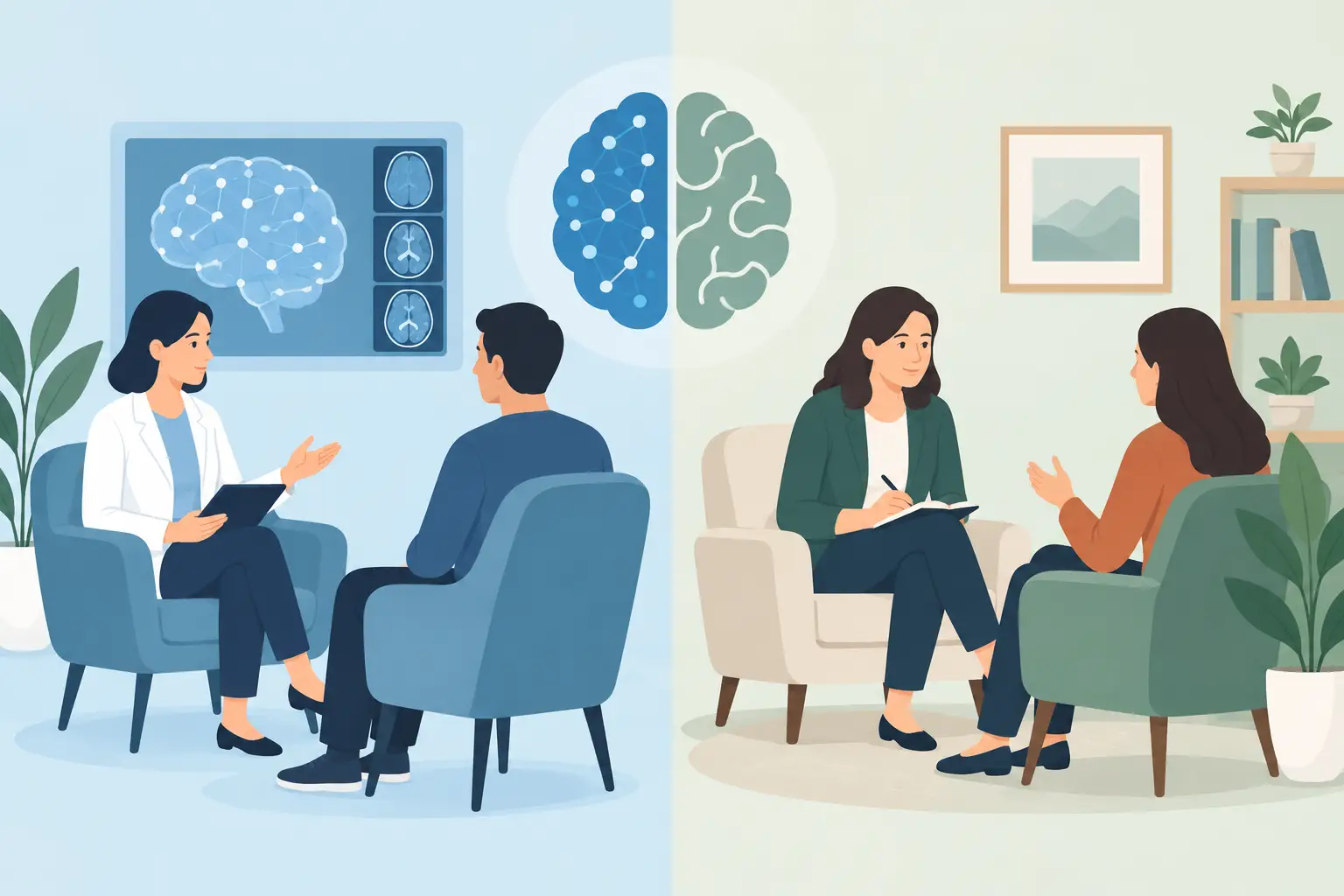
A person may understand exactly why they feel anxious, shut down in conflict, or struggle to sleep, yet still find that insight alone does not create change. This is where the question of neurocounselling versus counselling becomes meaningful. Both approaches can offer compassionate, effective support, but neurocounselling brings a more explicit focus to the brain, nervous system, development, behaviour and daily conditions that shape emotional wellbeing.
For many people, this distinction is not about choosing between a clinical approach and a caring one. It is about finding therapy that makes sense of their experience and provides practical ways to move forward.
What is counselling?
Counselling is a broad form of talking therapy that helps people explore thoughts, emotions, relationships and life challenges in a confidential, supportive setting. A counsellor may assist someone through anxiety, low mood, grief, work stress, relationship difficulties, identity questions or significant change.
At its best, counselling is collaborative and person-centred. Rather than telling a client what to do, the practitioner listens carefully, asks considered questions and helps the person identify patterns, values and workable next steps. Depending on the practitioner’s training, counselling may draw on established approaches such as cognitive behavioural therapy (CBT), acceptance and commitment therapy (ACT), interpersonal therapy (IPT), solution-focused therapy or emotion-focused work.
Traditional counselling can be highly effective. A strong therapeutic relationship, thoughtful reflection and evidence-based strategies can reduce distress and support meaningful change. It is especially valuable when a person needs a safe place to process an experience, make a decision, build insight or strengthen coping skills.
What is neurocounselling?
Neurocounselling applies counselling and psychotherapy through a brain-based and neurodevelopmental lens. It considers how the nervous system, emotional regulation, attention, memory, stress physiology, sensory processing, sleep and lifestyle interact with a person’s thoughts and relationships.
The central question shifts slightly. Alongside asking, “What are you thinking and feeling?”, neurocounselling also asks, “What may be happening in your nervous system, and what conditions would help it feel safer, steadier and more able to adapt?”
This does not mean reducing a person to their brain or treating every difficulty as a biological problem. Brain function is shaped by experience, relationships, trauma, environment, health, movement, nutrition, rest and meaning. A neurocounselling approach recognises that emotional healing is both psychological and embodied.
For example, a client experiencing persistent worry may work on unhelpful thought patterns through CBT. They may also examine the factors keeping their stress response activated: irregular sleep, high caffeine intake, relentless demands, limited recovery time, avoidance patterns or a history of feeling unsafe in relationships. The work remains person-centred, while the formulation becomes broader.
A note on terminology
Neurocounselling is not a single, universally standardised therapy model, nor does it replace medical, psychiatric or neurological assessment when these are needed. The quality of care depends on the clinician’s qualifications, ethical practice, understanding of evidence and ability to tailor treatment to the individual.
A responsible brain-based approach avoids overstating what neuroscience can tell us about an individual person. It does not require brain scans, make promises about “rewiring” the brain, or offer a quick fix for complex mental health concerns. Instead, it uses relevant knowledge of the brain and nervous system to inform practical, evidence-aware therapeutic care.
Neurocounselling versus counselling: the key differences
The difference is usually one of emphasis, not opposition. Both approaches may use conversation, reflection, psychoeducation and proven psychological interventions. Both should be grounded in trust, consent, clear goals and respect for the client’s lived experience.
In conventional counselling, sessions may focus primarily on emotional expression, relationships, beliefs, choices and behavioural change. In neurocounselling, these areas remain important, but they are often considered alongside nervous system capacity. A person who becomes overwhelmed during conflict, for instance, may not simply need better communication techniques. They may first need support to recognise early signs of activation, regulate their body and create enough emotional safety to use those techniques.
Neurocounselling also tends to place greater weight on psychoeducation. Understanding why the brain responds to threat, why habits become entrenched, or why exhaustion affects mood can reduce shame. Rather than seeing anxiety, shutdown or impulsivity as personal failings, clients can learn to view them as understandable protective responses that can be worked with over time.
Lifestyle factors may be addressed more directly as well. Sleep, movement, nutrition, alcohol use, social connection, time outdoors and mindful recovery are not presented as superficial wellness tasks. They can materially influence stress regulation, mood, concentration and resilience. The appropriate focus will vary. A person in acute grief does not need a rigid lifestyle programme; they may first need compassion and space to process loss. Someone with chronic stress, however, may benefit from structured changes that support their therapy goals between sessions.
When a brain-based approach may be helpful
Neurocounselling may appeal to people who want to understand the links between their body, brain, emotions and behaviour. It can be particularly useful for concerns where regulation and daily functioning are central, including anxiety, chronic stress, sleep difficulties, depression, emotional reactivity and burnout.
It may also be relevant for neurodivergent adults, including people with ADHD or autism, who have felt misunderstood by approaches focused only on motivation or thought change. An informed clinician can explore executive functioning, sensory needs, social fatigue, routines, attention patterns and the impact of masking without assuming that neurodivergence itself is something to be fixed.
For couples, a nervous-system perspective can soften blame. When one partner pursues reassurance and another withdraws, both may be responding to perceived threat in different ways. Therapy can help each person recognise the cycle, regulate more effectively and build interactions that support connection rather than escalation.
That said, neurocounselling is not automatically the better choice for every person. Some clients want focused support around a specific decision, relationship issue or period of adjustment, and counselling may meet that need very well. Others may prefer a depth-oriented psychotherapy approach, group programme, medical support or a combination of services. The right fit depends on the concern, goals, preferences, history and the therapeutic relationship.
What a neurocounselling session can look like
A neurocounselling session should still feel like therapy, not a lecture about the brain. The practitioner begins by understanding the client’s concerns, strengths, history, relationships and goals. Together, they develop a working formulation: a shared explanation of what may be maintaining the difficulty and what could support change.
Sessions may include targeted psychotherapy, skills for emotional regulation, mindfulness or grounding practices, values-based action and reflection on relationship patterns. Where relevant, the therapist may help the client develop realistic strategies around sleep, activity, nourishment and routines. These strategies should be collaborative and achievable, not another set of demands for an already overwhelmed person.
Progress is often measured in more than symptom reduction. A client may notice that they recover more quickly after stress, sleep with fewer disruptions, communicate with greater clarity, feel less ruled by anxiety or understand their own needs with more compassion. These changes can build gradually, particularly where longstanding stress, trauma or neurodevelopmental differences are involved.
Choosing the support that fits
When considering a therapist, it can help to ask how they understand your presenting concern, which therapeutic methods they use and how they adapt care to your needs. If you are interested in a brain-based approach, ask whether the clinician integrates neuroscience thoughtfully with evidence-based psychotherapy rather than relying on oversimplified claims.
It is also reasonable to ask how lifestyle and physical wellbeing are discussed, how progress is reviewed, and when a referral to a GP, psychologist, psychiatrist or other health professional may be appropriate. Good care recognises its scope and works alongside other supports when needed.
At Keystone Therapy, neurocounselling is approached as structured, person-centred care that aims to educate, empower and facilitate growth. The goal is not to separate mind from body, or science from compassion. It is to help you understand your patterns with greater clarity and build conditions in which change can become more possible.
The most helpful therapy is rarely defined by a label alone. It is the therapy that helps you feel understood, gives you a credible path forward and supports you to practise change in the life you are actually living.