

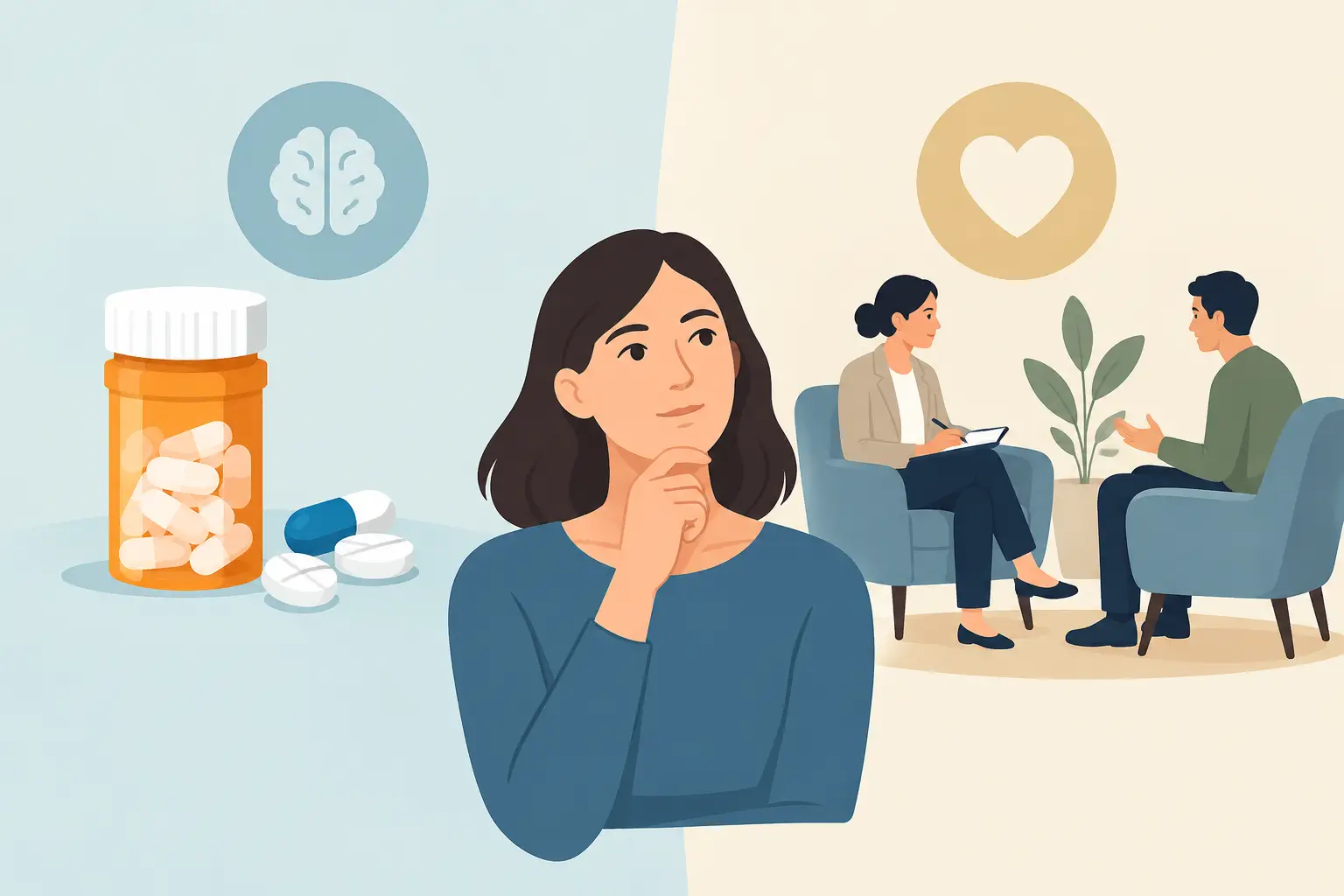
A prescription can bring welcome relief when anxiety, depression or sleeplessness has made daily life feel unmanageable. Therapy can offer something different: a structured space to understand what is happening, build skills and create change that extends beyond symptom relief. The question of medication versus therapy is therefore rarely about choosing the single “right” option. It is about identifying the support that best fits your current needs, health history, preferences and goals.
For many people, the most helpful answer changes over time. There may be periods when medication creates enough stability to engage in therapy. At other times, therapy, lifestyle adjustments and supportive relationships may be the central focus. A thoughtful plan makes room for both possibilities.
Medication versus therapy: different roles in recovery
Medication and psychotherapy can both be evidence-based treatments, but they work in different ways. Medication is generally prescribed by a GP or psychiatrist to influence biological processes associated with mental health symptoms. Depending on the medication and condition, it may reduce the intensity of low mood, panic, intrusive thoughts, agitation, sleep disruption or difficulty concentrating.
Therapy focuses on the patterns that shape how a person thinks, feels, relates and responds under pressure. It can help someone recognise the early signs of overwhelm, understand the impact of past experiences, practise emotional regulation and make changes that align with their values. In a person-centred therapeutic relationship, the client is not treated as a diagnosis. Their nervous system, relationships, identity, environment and strengths all matter.
Neither approach should be reduced to a simple story. Medication is not a failure of willpower, and therapy is not simply “talking about feelings”. Both can require patience, active participation and regular review.
When medication may be a helpful part of care
Medication may be worth discussing with a qualified prescriber when symptoms are severe, persistent or significantly affecting safety and everyday functioning. For example, someone experiencing major depression may struggle to get out of bed, eat regularly, work or connect with others. A person with intense anxiety may be caught in a cycle of panic, avoidance and poor sleep that leaves little capacity to practise therapeutic strategies.
In these circumstances, medication may reduce symptom intensity enough to make other forms of care more accessible. It can be particularly useful when a person has tried non-medication supports without sufficient improvement, has recurrent symptoms, or is facing a period of acute distress.
However, response to medication varies. A medication that helps one person may cause unwanted side effects or offer limited benefit for another. Finding the right option can take time, and changes should be made in consultation with the prescribing clinician. Some medications also need careful monitoring, especially when there are co-occurring physical health conditions, pregnancy considerations, substance use concerns or a history of difficult reactions.
Medication can support recovery, but it does not automatically resolve the stressors, relationship patterns, self-criticism, trauma responses or lifestyle factors that may be maintaining distress. This is where therapy can be particularly valuable.
What therapy can address that medication cannot
Psychotherapy helps people develop an informed understanding of their own inner experience. Rather than trying to eliminate every difficult emotion, therapy can build the capacity to respond to thoughts and feelings with greater flexibility, self-awareness and choice.
Cognitive behavioural therapy, or CBT, can help identify unhelpful thinking patterns and behavioural cycles. Acceptance and commitment therapy, or ACT, supports people to make room for difficult internal experiences while taking action towards what matters. Interpersonal therapy, or IPT, explores how relationships, role changes, grief and conflict can affect mental health.
At Keystone Therapy, an integrative approach also considers brain function, neurodevelopment, sleep, movement, nutrition, stress physiology and the mind-body connection. These factors do not replace appropriate medical care. They provide a fuller picture of why a person may be struggling and what can support their capacity to heal.
For adults with ADHD or autism, therapy can be especially helpful when it is neurodiversity-affirming and adapted to the person’s communication style, sensory needs and executive functioning profile. Anxiety or low mood may be linked to years of masking, chronic overwhelm, social misunderstandings or burnout. A purely symptom-focused response can miss this context.
Is combined treatment more effective?
For moderate to severe depression and some anxiety presentations, a combination of medication and therapy may be more beneficial than either approach alone. Medication may ease the biological burden of symptoms, while therapy offers tools for navigating the thoughts, behaviours and circumstances connected to those symptoms.
Combined care is not automatically necessary for everyone. Someone with mild situational anxiety may make substantial progress through therapy, improved sleep, gradual exposure to feared situations and practical changes to workload or boundaries. Another person may have found medication helpful in the past but now want to use therapy to reduce relapse risk and strengthen coping skills.
The useful question is not, “Which treatment is better?” It is, “What is maintaining this difficulty, and what support would give me the best chance of meaningful improvement?”
Making a decision with the right people
A collaborative discussion is the safest starting point. A GP or psychiatrist can assess medication options, possible side effects, interactions and medical contributors to symptoms. A psychologist, counsellor or psychotherapist can help clarify therapeutic goals and identify the emotional, behavioural and relational patterns that deserve attention.
It helps to be honest about what you want from treatment. You may want to sleep through the night, return to work, feel less reactive with your partner, manage panic on public transport or understand why small demands feel so overwhelming. Clear goals make it easier to review whether treatment is helping.
You can also ask practical questions. How long might it take to notice a benefit? What side effects should I monitor? How will progress be reviewed? What type of therapy is recommended and why? What can I do between sessions to support my nervous system? Good care should educate and empower you, not pressure you into a path that does not feel understood.
Supporting the brain beyond the consulting room
Mental health care is strongest when it recognises that the brain and body are always in conversation. Sleep deprivation can increase emotional reactivity. Inconsistent meals can affect energy and concentration. Chronic stress can narrow attention towards threat. Social disconnection can make depression feel more entrenched.
This does not mean that lifestyle change is a cure-all or that people are responsible for symptoms caused by complex biology, trauma or circumstances. It means small, realistic adjustments can complement formal treatment. Regular movement, nourishing food, steadier sleep routines, time outdoors, meaningful connection and mindfulness practices may all support regulation when tailored to the individual.
The aim is not perfection. For someone in depression, a brief walk, a shower or one nourishing meal may be a meaningful therapeutic step. For someone with anxiety, practising a breathing exercise before a difficult conversation may create enough pause to choose a different response.
Review, adjust and keep the focus on your life
A treatment plan should not be set once and forgotten. Symptoms, side effects, stressors and priorities can change. Regularly reviewing what is improving, what remains difficult and what feels sustainable allows care to stay responsive.
If you are taking medication, do not stop or alter it suddenly without speaking with your prescriber. If you are in therapy and feel stuck, it is reasonable to raise this openly. The therapeutic relationship should be a place where concerns can be explored, goals can be refined and the approach can be adjusted.
The most useful path is the one that helps you feel more able to participate in your own life: to rest, connect, make decisions, manage challenges and move towards what matters to you. Whether that includes therapy, medication or both, compassionate and well-informed support can help make change feel possible.