
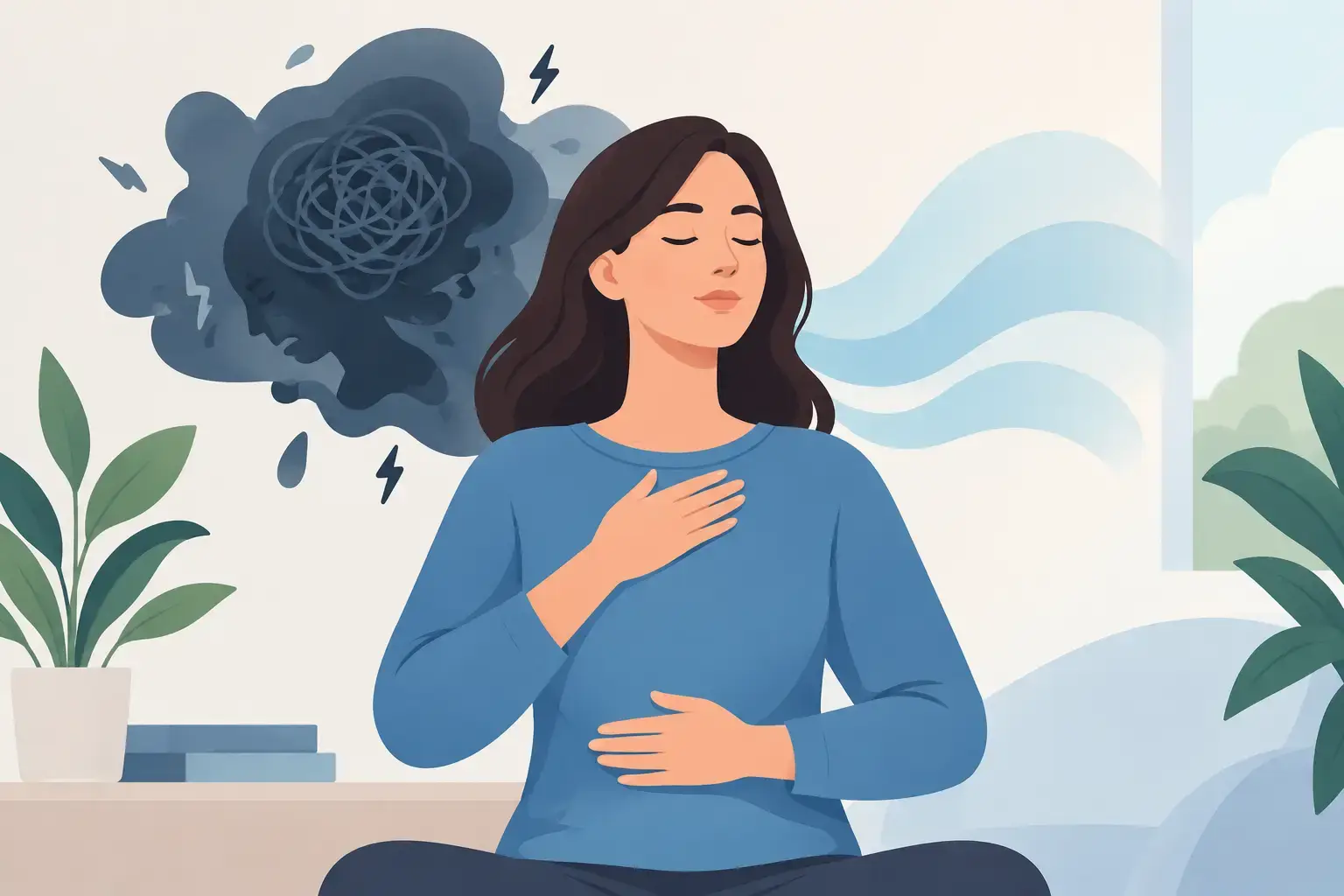
A panic surge can feel immediate and absolute: a racing heart, tight chest, dizziness, tingling, nausea, or the frightening sense that something is seriously wrong. Learning to manage panic symptoms does not mean forcing yourself to feel calm on command. It means understanding what your nervous system is doing, responding in ways that reduce escalation, and building confidence that the sensations can pass safely.
Panic is deeply uncomfortable, but it is not a personal failure or a sign that you are losing control. It is a whole-body alarm response. With the right support and practice, many people find that panic becomes less frequent, less intense, and far less frightening.
Why panic feels so convincing
During a panic episode, the brain detects threat and activates the sympathetic nervous system. Stress hormones increase, breathing may become quicker or shallower, muscles tighten, and attention narrows towards possible danger. This response is designed to protect us in a genuine emergency.
The difficulty is that the alarm can be triggered by internal sensations as well as external threats. A skipped heartbeat, fatigue, a crowded train, conflict at home, caffeine, or a memory of a previous episode may be interpreted by the brain as danger. Once you notice the physical sensations, it is easy to fear them: “What if I faint?” “What if I cannot breathe?” “What if this gets worse?” That fear adds further fuel to the alarm.
This does not mean the symptoms are imagined. They are real physiological experiences. The opportunity is to change the meaning your brain assigns to them, so the cycle of sensation, fear, and escalation gradually loosens.
How to manage panic symptoms in the moment
The most useful strategies are usually simple, repeatable, and practised before a crisis. Trying to solve every thought while panic is peaking can create more pressure. Instead, focus first on signalling safety to your body and orienting yourself to the present.
Name the experience without arguing with it
A brief, grounded statement can interrupt catastrophic interpretations. You might say to yourself: “This is panic. My body is in alarm mode. It feels intense, and it will pass.”
This is not positive thinking. It is an accurate reframe. You are recognising that panic is a temporary nervous-system state rather than proof of immediate danger. Some people find it helpful to write this statement in their mobile notes so it is available when thinking feels difficult.
Slow the breath gently
Panic can lead to over-breathing, which may contribute to light-headedness, tingling, chest discomfort, and feelings of unreality. Rather than taking large, deep breaths, aim for a quieter and slower rhythm. Let your exhale become slightly longer than your inhale.
For example, breathe in comfortably for around three seconds and breathe out for around five seconds. There is no need to make this perfect. If counting creates pressure, simply soften your jaw, lower your shoulders, and imagine breathing out through a straw. The goal is not to eliminate every sensation straight away. It is to help your body receive a cue that it can begin to stand down.
Ground through the senses and body
Panic pulls attention towards the body and imagined future danger. Grounding brings attention back to what is actually around you. Notice the pressure of both feet on the floor, the texture of a chair beneath you, or the temperature of the air on your skin. Slowly identify a few objects you can see and describe their colour, shape, or position.
Movement can also help discharge some of the stress response. If it is safe to do so, take a slow walk, stretch your hands, or press your palms together. Avoid treating movement as an escape from panic. The aim is to remain present with the experience while giving your body a steady, organised action to follow.
Reduce the struggle to make it disappear
One of the paradoxes of panic is that fighting urgently against symptoms can make them seem more dangerous. A more helpful stance is: “I do not like this, but I can allow these sensations to be here while they pass.”
This approach is informed by acceptance-based therapies, including Acceptance and Commitment Therapy. Acceptance does not mean resigning yourself to panic. It means dropping the exhausting battle with sensations so you can respond with more flexibility and less fear.
What to avoid when panic is active
Many coping behaviours bring short-term relief but can unintentionally maintain panic over time. Leaving every situation at the first sign of anxiety, repeatedly checking your pulse, searching symptoms online, or relying on reassurance from others can teach the brain that the sensations were dangerous after all.
That does not mean you should push yourself into overwhelming situations without support. The most effective approach is often gradual and planned. If supermarkets, driving, meetings, or public transport have become linked with panic, therapy can help you build a paced exposure plan that restores confidence without flooding your nervous system.
It can also help to review common amplifiers. Caffeine, nicotine, alcohol, poor sleep, dehydration, irregular meals, and prolonged stress may not cause panic on their own, but they can lower your threshold for alarm. Small lifestyle adjustments can make a meaningful difference when they sit alongside psychological treatment rather than replace it.
Build a plan between episodes
Panic is easier to respond to when you have a plan before symptoms begin. Keep it brief enough that you will actually use it. Your plan might include a grounding phrase, a breathing cue, one person you can contact, and a reminder of what you will do after the episode passes, such as returning to the activity for a few minutes rather than avoiding it completely.
It is also useful to notice patterns without becoming hypervigilant. Consider what was happening in the day or week before an episode: sleep quality, workload, social pressure, conflict, illness, hormonal changes, stimulant use, or accumulated emotional strain. This is not about blaming yourself. It is about understanding the conditions that make your nervous system more reactive.
A brain-based, holistic approach also considers recovery capacity. Regular sleep, nourishing meals, physical activity, time outdoors, supportive relationships, and moments of genuine rest all influence emotional regulation. These foundations do not remove life stress, but they can expand the window in which your nervous system can cope with it.
When panic needs professional support
If panic is recurring, leading you to avoid places or activities, disrupting work or relationships, or leaving you constantly worried about the next episode, professional support can help. Cognitive Behavioural Therapy can address catastrophic thoughts and safety behaviours. Exposure-based work can help retrain the brain’s response to feared sensations and situations. ACT can support a less fearful relationship with internal experiences, while trauma-informed therapy may be relevant when panic is connected to past adversity.
At Keystone Therapy, support is tailored to the individual rather than limited to a symptom checklist. Therapy can explore the interaction between your nervous system, thought patterns, relationships, neurodevelopmental profile, stress load, sleep, and daily routines. For some people, telehealth offers a practical way to begin this work from a familiar environment; for others, in-person therapy provides valuable structure.
It is also wise to speak with a GP about new, severe, or changing symptoms, particularly chest pain, fainting, significant breathlessness, or symptoms that may have a medical cause. Seek urgent medical assistance if you believe you may be experiencing a medical emergency or are at risk of harming yourself.
Panic recovery is about trust, not perfection
Progress rarely means never feeling anxious again. More often, it means recognising an alarm response earlier, responding with less fear, and continuing to participate in the life you value. A panic episode may still feel unpleasant, yet it no longer has to decide where you go, what you attempt, or how small your world becomes.
Each time you meet panic with steadiness, curiosity, and appropriate support, you give your brain new evidence: these sensations are survivable, temporary, and not in charge of you.