
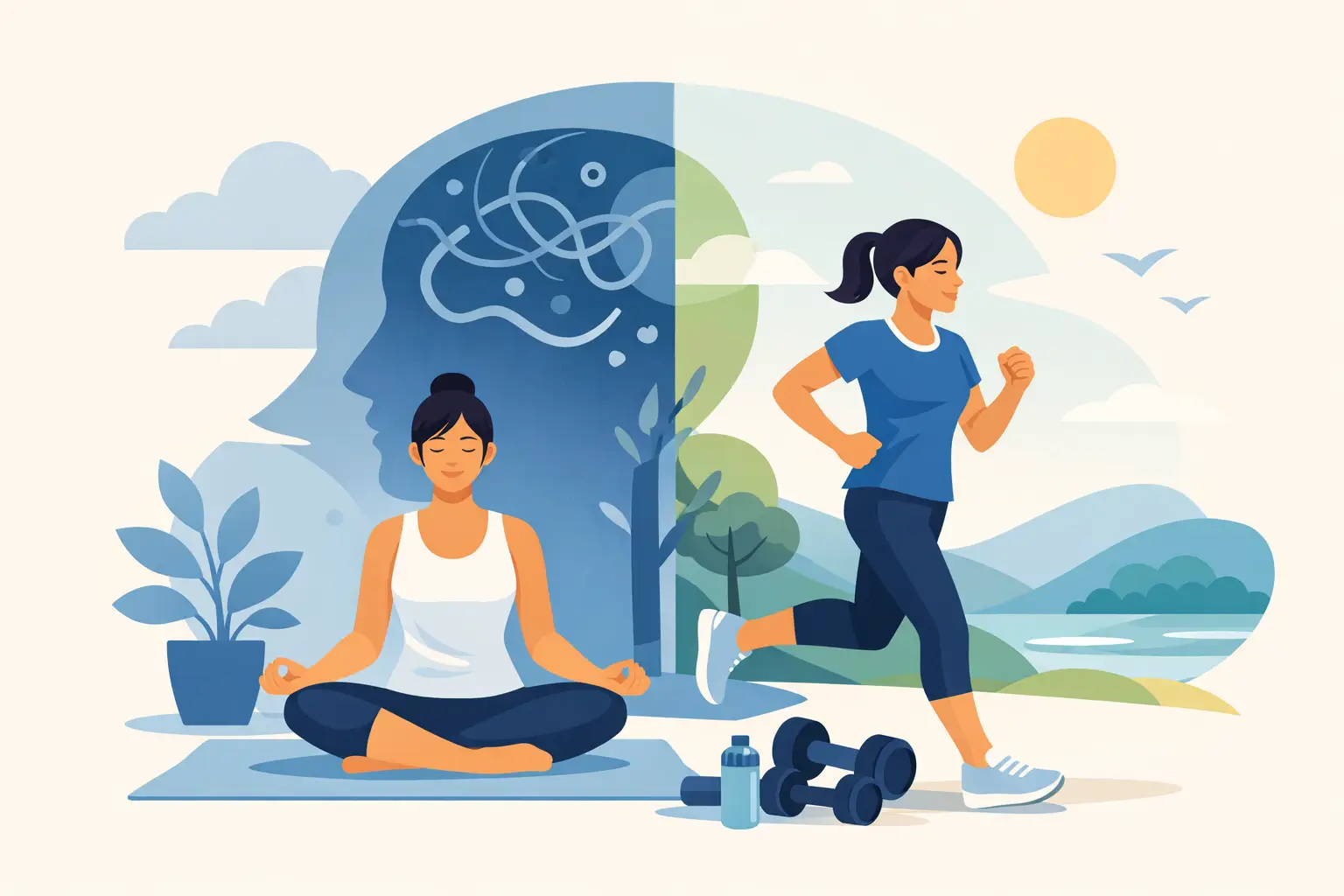
A racing mind is not always asking for more thinking. Sometimes it is asking for a safe, physical way to complete the stress response. Exercise for anxiety relief can help by giving the body an outlet for accumulated activation, while also creating small, repeatable experiences of steadiness, agency and recovery.
For many people, movement is most useful when it is not treated as another task to perform perfectly. The aim is not to exercise anxiety away, train through exhaustion or force yourself into a routine that feels punishing. It is to use movement thoughtfully, alongside psychological support, sleep, nutrition and meaningful connection, to help the nervous system become more flexible.
How exercise affects anxiety in the brain and body
Anxiety involves more than worried thoughts. It can show up as muscle tension, shallow breathing, a fast heartbeat, digestive discomfort, restlessness, poor sleep and a persistent sense of threat. These responses are real physiological signals. They are not a personal failure or evidence that you are incapable of coping.
Appropriate physical activity can support emotional regulation through several pathways. It uses some of the energy mobilised by stress hormones, improves circulation, supports sleep pressure and may increase neurotransmitters involved in mood and motivation. Repeated movement can also help the brain learn that changes in heart rate, breathing and body temperature are not automatically dangerous.
That last point matters for panic and health anxiety. A brisk walk can produce sensations that resemble anxiety: a quicker pulse, warmth and heavier breathing. When these sensations occur in a predictable, safe setting, some people gradually become less alarmed by them. This is not about dismissing distress. It is about building tolerance for normal bodily activation with care and, where needed, therapeutic guidance.
Exercise can also interrupt patterns that maintain anxiety. Avoidance often provides immediate relief but can make feared situations feel larger over time. Leaving the house for a short walk, attending a gentle class or moving outdoors may become a manageable form of behavioural activation. The action is small, but it communicates something valuable to the brain: discomfort can be present and life can still continue.
Choosing exercise for anxiety relief
The best form of exercise is usually the one you can return to without dread. For one person, that may be swimming laps; for another, it may be walking along a local footpath with a podcast, gardening, yoga or a short strength session at home. Enjoyment, access, sensory preferences, physical health and available time all matter.
Gentle to moderate aerobic activity is a sensible starting point for many adults. Walking, cycling, swimming and dancing can create rhythmic movement without demanding complex decisions. A ten-minute walk after work may be more regulating than an ambitious gym plan that only adds pressure to an already overloaded week.
Strength training can be particularly helpful for people who feel disconnected from their body or powerless in the face of stress. Controlled lifting, resistance bands or bodyweight exercises require attention to posture, breathing and gradual progression. This can build confidence in physical capability. However, an intense training environment may not suit everyone, especially if it increases comparison, sensory overload or perfectionism.
Mind-body movement, including yoga, tai chi and Pilates, may support awareness of breath and muscular tension. These practices can be useful for slowing down, but they are not automatically calming for every person. Stillness or focused body awareness can initially feel uncomfortable for people with trauma histories, panic symptoms or dissociation. If that is your experience, choose shorter sessions, keep your eyes open, practise near an exit or begin with walking instead.
Start below your anxiety threshold
When anxiety is high, a plan that is technically ideal can still be impossible to follow. Starting smaller is not lowering the standard. It is a clinical strategy for creating consistency and reducing the shame that often follows all-or-nothing goals.
Consider the difference between committing to a 60-minute workout five days a week and committing to putting on your shoes and walking for five minutes after lunch. The second option may seem modest, but it removes barriers and builds evidence that you can act even when motivation is low. Once it feels established, you can extend the walk, add hills, invite a friend or include a few minutes of strength work.
Use a level of intensity that leaves you feeling more settled afterwards, rather than depleted or overstimulated. A useful guide is the talk test: during moderate activity, you should generally be able to speak in short sentences. If you are returning to movement after a long break, living with chronic illness, pregnant, recovering from injury or taking medication that affects heart rate or energy, seek individual medical advice before changing your routine.
A realistic weekly rhythm
Rather than pursuing a perfect schedule, aim to include movement across the week. Two or three planned sessions, combined with brief moments of incidental activity, can be a meaningful beginning. For example, you might walk for 15 minutes on three mornings, complete two short resistance sessions and take a five-minute movement break on demanding workdays.
Attach movement to an existing cue where possible. Walk after your morning coffee, stretch while dinner cooks or take a lap around the block after a telehealth appointment. Habit cues reduce the need to negotiate with anxiety each time. If you miss a session, return at the next available opportunity. Consistency is built through restarting, not through never slipping.
When exercise can make anxiety feel worse
Exercise is supportive, but it is not neutral in every circumstance. High-intensity training can temporarily increase adrenaline, body heat and breathlessness. For some people, these sensations can trigger panic, particularly when exercise begins abruptly or occurs during a period of poor sleep, high stress or excessive caffeine intake.
If this happens, it does not mean exercise is unsuitable for you. It may mean the intensity, timing or setting needs adjustment. Try a longer warm-up, reduce pace, choose low-impact movement or exercise with a trusted person. Paying attention to hydration, regular meals and recovery can also make a noticeable difference to how the body interprets exertion.
Compulsive exercise is another important consideration. When movement becomes a way to control food, avoid emotions, punish the body or override pain and fatigue, it may worsen wellbeing rather than support it. Rest days, flexibility and compassionate self-observation are part of a healthy relationship with exercise.
Exercise should not be expected to carry the full weight of severe anxiety, trauma, depression or burnout. If anxiety is disrupting work, relationships, sleep or daily functioning, structured therapy can help identify the patterns underneath the symptoms. Approaches such as cognitive behavioural therapy, acceptance and commitment therapy, and body-informed regulation strategies can complement movement by addressing thought patterns, avoidance, values and emotional safety.
Make movement an act of self-support
The meaning you assign to exercise influences its effect. If every session is framed as proof that you are behind, unfit or failing, the nervous system may register movement as another threat. A more helpful frame is: this is a chance to support my brain and body through a difficult day.
Notice what changes after movement, without demanding an immediate mood transformation. Perhaps your shoulders soften slightly, your thoughts become less sticky or you sleep a little more deeply. These subtle shifts matter. They teach you which forms of movement genuinely support your regulation.
At Keystone Therapy, we view anxiety through a whole-person lens. Exercise can be a valuable part of care, yet it works best when it is integrated with personalised psychological support and an understanding of your unique nervous system, history and circumstances.
Choose a form of movement that feels possible today, make it small enough to begin, and allow that action to be evidence that your body can be a place of support rather than another source of pressure.