

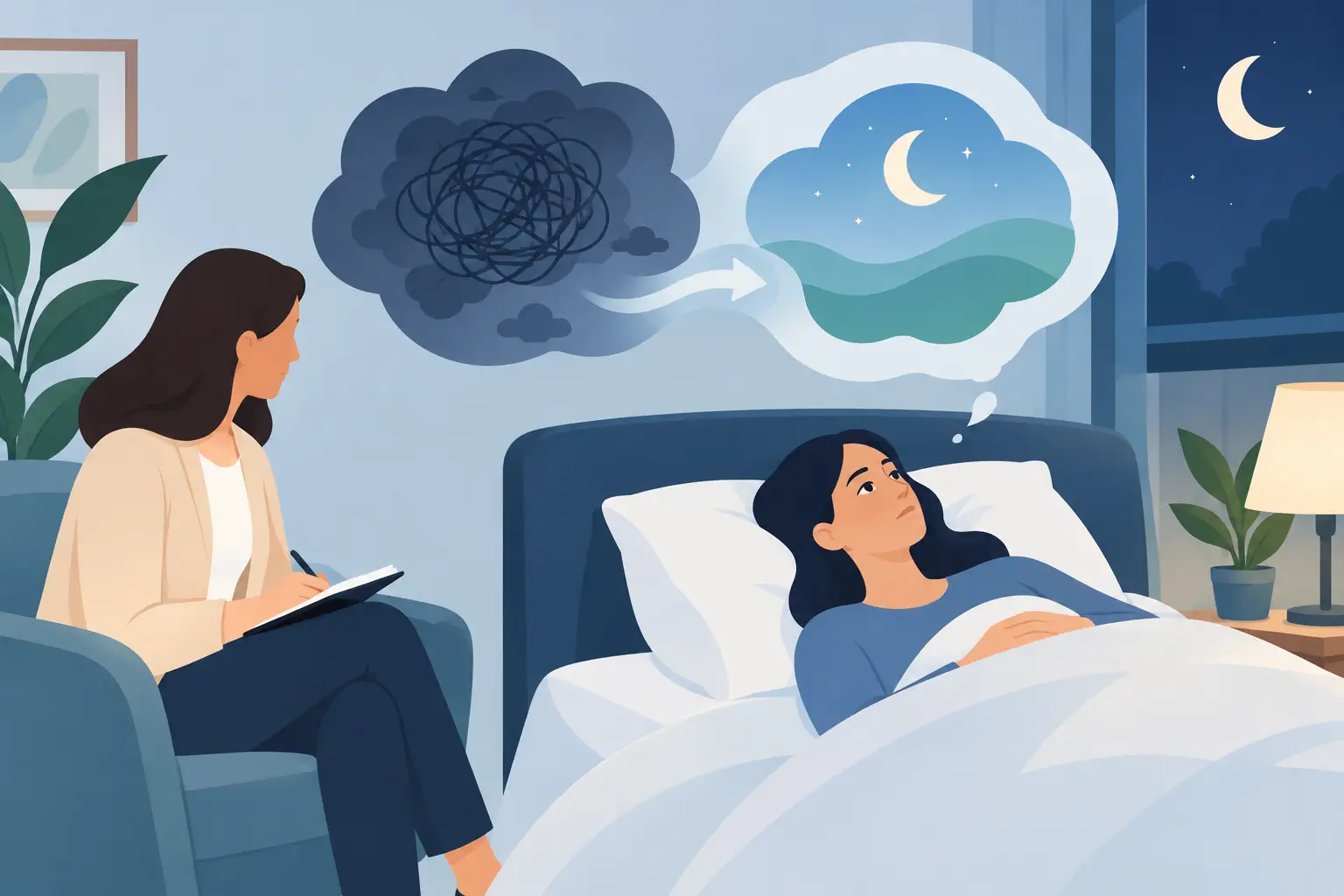
The bedroom can become a place of pressure when sleep feels uncertain. You may feel tired all day, then suddenly alert the moment your head reaches the pillow – monitoring the clock, calculating tomorrow’s fatigue, and trying harder to make sleep happen. If you are asking, can therapy help sleep anxiety, the answer is often yes. Therapy can help change the patterns of threat, thought and behaviour that keep the nervous system on guard at night.
Sleep anxiety is not simply a lack of discipline or a failure to follow the right bedtime routine. For many people, it is a learned cycle in which poor sleep becomes frightening, and the fear of poor sleep makes genuine rest more difficult. A therapeutic approach can educate, empower and support you to interrupt that cycle with care rather than more effort.
What sleep anxiety can look like
Sleep anxiety often involves worry before bed, but it can take several forms. Some people dread lying awake. Others wake during the night and immediately begin scanning their body or thoughts for signs that they will not get back to sleep. For parents, professionals, shift workers and people managing health concerns, the worry may centre on coping the next day.
The experience can include a racing mind, physical tension, a faster heart rate, checking the time repeatedly, searching for sleep advice late at night, or cancelling plans because exhaustion feels inevitable. It may also lead to compensatory habits such as going to bed very early, spending long periods awake in bed, napping unpredictably, or relying on alcohol, screens or medication in ways that do not offer lasting relief.
These behaviours make sense in the short term. They are attempts to regain control. Yet when the brain begins to associate bed, night-time or waking with struggle and danger, those efforts can accidentally reinforce alertness.
Can therapy help sleep anxiety?
Therapy can help sleep anxiety because it addresses more than the number of hours you sleep. It explores the relationship between your thoughts, emotions, physiology, routines and environment. Rather than demanding that you relax, therapy helps you understand why your nervous system may be finding it difficult to stand down.
A clinician may work with you to identify the beliefs maintaining the problem. Common examples include, “If I do not sleep eight hours, I will not cope”, “I have to fall asleep now”, or “Being awake means something is wrong with me.” These thoughts are understandable, especially after several difficult nights. But they can create urgency, and urgency is not a state that supports sleep.
Therapy also creates space for the factors around sleep anxiety. Work stress, grief, trauma, relationship strain, chronic pain, hormonal changes, neurodivergent sensory needs, depression and generalised anxiety can all shape sleep. The right support does not treat every sleep difficulty as the same problem.
How therapy changes the sleep-anxiety cycle
A brain-based, person-centred approach recognises that sleep is both biological and learned. The nervous system is designed to stay awake when it perceives threat. At night, that threat may be external, such as an unsafe environment or an unpredictable household. It may also be internal: a feared thought, a surge of panic, or the memory of previous sleepless nights.
Therapy can help reduce this threat response in several connected ways.
Cognitive behavioural strategies
Cognitive Behavioural Therapy for Insomnia, often called CBT-I, is a structured, evidence-based treatment for persistent insomnia. It can help people examine unhelpful sleep beliefs and make behavioural changes that strengthen the association between bed and sleep rather than bed and worry.
This may involve establishing a more consistent wake time, adjusting time spent awake in bed, and reducing habits that inadvertently train the brain to expect wakefulness there. These strategies should be personalised. For example, rigid sleep rules may not suit someone with chronic illness, caring responsibilities, shift work or a history of trauma. A therapist can help adapt the principles safely and realistically.
Working with anxious thoughts differently
Therapy is not about forcing positive thoughts at 2 am. Approaches such as Acceptance and Commitment Therapy can help you notice worry without entering a battle with it. The goal is often to reduce the struggle around wakefulness, not to guarantee immediate sleep.
When a person can respond to a difficult night with greater flexibility – “This is uncomfortable, but I can care for myself through tomorrow” – the catastrophic meaning of wakefulness can soften. Over time, this can reduce the anticipatory fear that fuels sleep anxiety.
Supporting emotional regulation
Sleep loss can lower the brain’s capacity to regulate emotion, while anxiety can fragment sleep. This two-way relationship can feel relentless. Therapy provides practical ways to recognise early signs of nervous system activation and respond before bedtime becomes the only moment of care.
Depending on your needs, this may include grounding skills, paced breathing, mindfulness practices, body-based regulation, boundary setting, or a planned period earlier in the evening to process worries. The aim is not to eliminate emotion. It is to give your brain repeated experiences of safety, recovery and choice.
Looking at the wider system
A holistic sleep plan considers the foundations that influence brain function: light exposure, movement, caffeine, alcohol, nourishment, social connection, medication, stress load and daily rhythm. None of these is a magic fix, and advice can become another source of pressure when it is delivered without context.
For instance, morning light and regular movement may support circadian rhythm, but a person experiencing burnout may first need to reduce demands and restore a basic sense of capacity. Someone with ADHD may need strategies that account for time blindness, sensory stimulation or a delayed sleep pattern. An integrative therapist helps distinguish useful adjustments from perfectionistic rules.
When sleep anxiety may need additional assessment
Therapy is valuable, but it is not the only form of support that may be needed. Persistent insomnia can coexist with medical and sleep-specific conditions, including sleep apnoea, restless legs syndrome, thyroid concerns, chronic pain, medication effects, perimenopause, depression and trauma-related symptoms.
A GP can help assess physical contributors and discuss medication where appropriate. If you snore loudly, stop breathing or gasp during sleep, feel excessively sleepy during the day, have severe leg discomfort at night, or experience major changes in mood, seeking medical assessment is particularly important. Therapy and medical care can work alongside each other.
Urgent support is needed if sleep deprivation is accompanied by thoughts of self-harm, mania, hallucinations, or an inability to manage essential daily tasks safely. These experiences deserve prompt clinical care, not self-management alone.
What to expect from therapy for sleep anxiety
The first sessions usually focus on building a clear picture of your sleep pattern and the life context around it. A therapist may ask about when the problem began, what happens before bed, overnight and the following day, as well as your health, stressors, relationships and previous attempts to improve sleep.
From there, therapy should be collaborative. Some people benefit from a focused sleep intervention over a number of sessions. Others need sleep work integrated into therapy for anxiety, trauma, depression or life transition. Progress is rarely perfectly linear. A difficult week does not mean the approach has failed; it can offer useful information about what is activating your system and what support is missing.
It is also reasonable to ask a prospective therapist how they work with insomnia and anxiety, whether they use CBT-I principles, and how they account for neurodivergence, trauma or medical complexity. Feeling understood matters. Sleep is deeply personal, and treatment should be both evidence-informed and humane.
At Keystone Therapy, sleep concerns can be explored within a broader neuro-counselling and psychotherapy framework, connecting emotional patterns with the lifestyle and mind-body factors that affect recovery. The purpose is not to chase a flawless night’s sleep, but to help you build a steadier relationship with rest and with yourself.
A calmer night often begins well before bedtime: with support that helps you carry less fear into the dark, and confidence that even after a difficult night, you have ways to cope.