
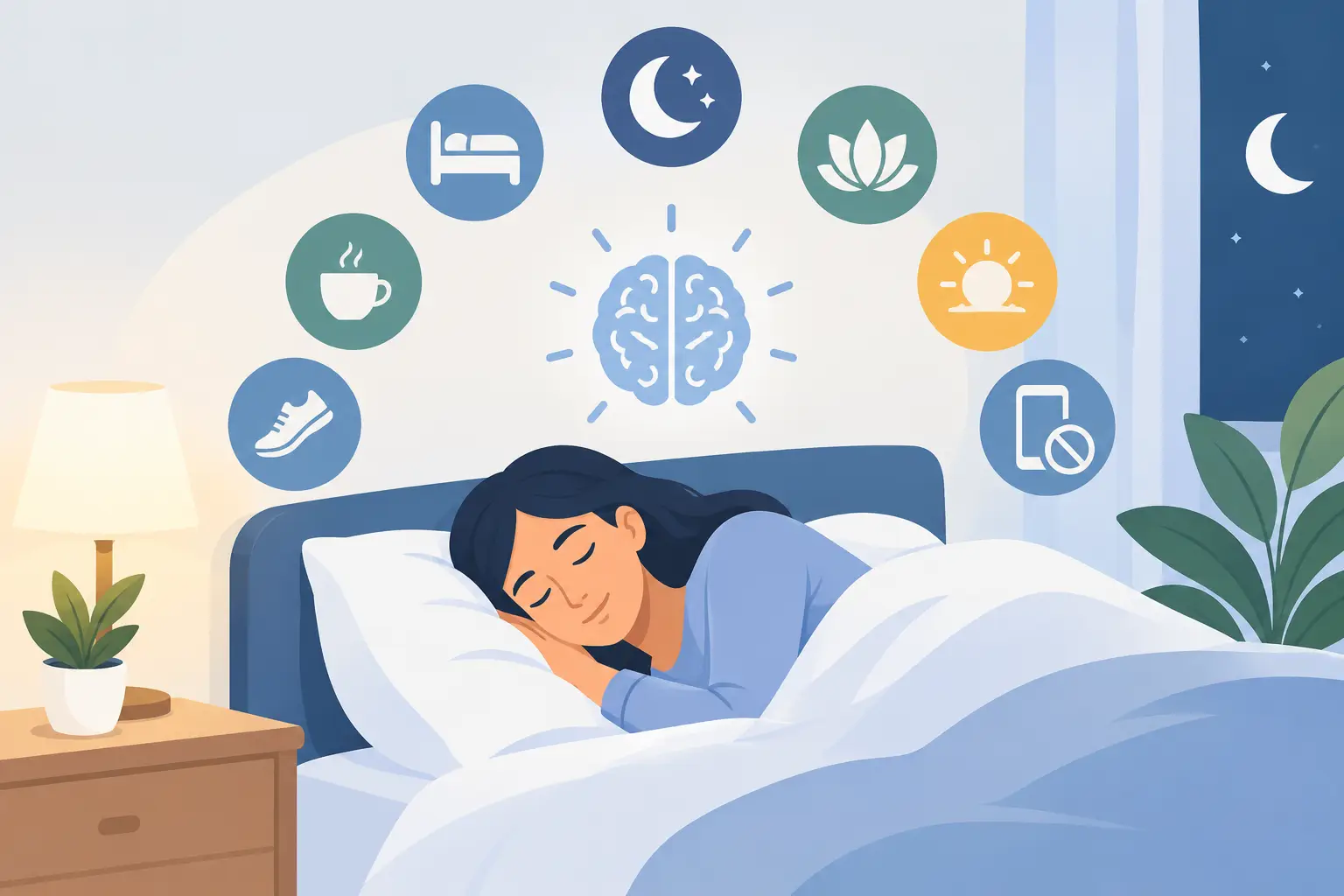
A difficult night can make ordinary demands feel disproportionately heavy. The next morning, a short email may feel threatening, a minor disagreement may escalate quickly, or concentration may seem out of reach. This is not a personal failure. Sleep is one of the core ways the brain regulates emotion, consolidates learning and restores its capacity to respond flexibly to stress. The best sleep habits mental health care can include are not about achieving a perfect bedtime routine. They are about giving your nervous system reliable conditions for rest.
For people living with anxiety, depression, burnout, ADHD, trauma-related stress or ongoing life pressure, sleep can become both a symptom and a maintaining factor. Poor sleep may intensify emotional reactivity, while worry, low mood or sensory sensitivity can make sleep harder to access. A brain-based approach recognises this two-way relationship and works with it compassionately.
Why sleep changes how you feel and cope
During sleep, the brain performs work that supports psychological wellbeing. It processes emotional experiences, strengthens useful memories and helps regulate stress-system activity. When sleep is shortened, fragmented or poorly timed, the brain’s threat-detection systems can become more reactive while the capacity for perspective, planning and impulse control is reduced.
This helps explain why insufficient sleep can heighten anxiety, irritability and hopelessness. It can also affect appetite, motivation, pain sensitivity and social connection. For someone already managing depression, chronic stress or neurodivergent overwhelm, these effects can create a difficult cycle: exhaustion reduces coping capacity, and reduced coping capacity further disrupts sleep.
Sleep is not a cure for complex mental health concerns, nor should it be used to minimise the role of trauma, relationships, work strain or neurobiology. However, it is a meaningful foundation for recovery. Improving sleep can make therapeutic strategies more accessible because a rested brain is generally better able to reflect, learn and regulate.
Best sleep habits for mental health: start with rhythm
The most effective sleep change for many people is also one of the least glamorous: establish a reasonably consistent wake-up time. Your circadian rhythm, the internal clock that influences sleep, alertness, hormones and mood, relies on regular cues. Waking at vastly different times across the week can create a form of social jet lag, even if you have not travelled anywhere.
Choose a wake time that is realistic for your work, caring and health needs, then aim to keep it within roughly an hour most days. This does not mean you must force yourself out of bed after a severe night of insomnia or illness. It means treating regularity as a gentle anchor rather than another rule to fail.
Morning light strengthens this rhythm. Getting outside soon after waking, even for a brief walk or a coffee in daylight, signals to the brain that the day has begun. Natural light is generally more effective than indoor lighting. If early mornings are dark, open blinds promptly and seek daylight when it becomes available.
Let sleepiness guide bedtime
Many people try to compensate for poor sleep by going to bed very early. Understandably, this can backfire. Spending long periods awake in bed may teach the brain to associate the bedroom with alertness, frustration and clock-watching.
Instead, begin a wind-down period before bed, but aim to get into bed when you feel genuinely sleepy. Sleepiness is different from tiredness. Tiredness can feel like fatigue, low energy or exhaustion; sleepiness is the sense that you could actually fall asleep. If you are lying awake and becoming increasingly frustrated, get up and do something quiet in dim light until drowsiness returns. A paper book, calm music or a simple repetitive activity can help. Avoid turning this into productive time.
Create a wind-down that lowers stimulation
The hour before sleep does not need to resemble a wellness advertisement. It needs to reduce demands on your nervous system. A predictable sequence can be helpful: prepare for tomorrow, wash or shower, dim lights, take prescribed medication as directed, and do something that feels settling rather than stimulating.
Screens are not automatically the enemy, particularly when a familiar television program or audiobook helps someone disengage from intrusive thoughts. The more relevant question is what the content and device use do to your arousal level. Doomscrolling, work messages, online conflict and bright close-up screens often keep the brain activated. If you use a device, reduce brightness, avoid emotionally charged content and set a clear stopping point.
For some people, a brief written ‘worry list’ is useful. Write down what is circling in your mind, one next step for each issue where possible, and a reminder that it can wait until tomorrow. This does not solve the problem, but it can reduce the brain’s need to keep rehearsing it overnight.
Use the bedroom as a cue for safety and rest
Your sleep environment does not have to be perfect, expensive or silent. It should be as comfortable and predictable as your circumstances allow. A cool, dark and quiet room supports sleep for many people, while earplugs, an eye mask, a fan or steady background sound may reduce disruptive sensory input.
This may require individual adjustment. Autistic people and those with ADHD may have stronger sensory preferences around temperature, fabric texture, weight of bedding or sound. Honouring these needs is not indulgent. It is practical nervous-system care. Some people sleep better with a weighted blanket, while others find it restrictive or too warm. Experiment gradually and prioritise comfort and safety.
Where possible, reserve the bed for sleep and intimacy rather than work, online shopping or difficult conversations. If your bedroom must serve several functions due to limited space, create a transition ritual. Packing away a laptop, changing the lighting or placing a cover over a workspace can help the brain recognise that the day is ending.
Be thoughtful about caffeine, alcohol and exercise
Caffeine can remain active in the body for many hours. A mid-afternoon coffee may not affect one person, while it can delay sleep for another. If sleep is difficult, try moving your last caffeinated drink earlier in the day for two weeks and observe the pattern without judgement. Energy drinks deserve particular caution, as they may combine high caffeine with sugar and can increase physical anxiety symptoms.
Alcohol may make you feel sleepy initially, but it commonly disrupts sleep later in the night and can worsen early waking, low mood and anxiety the following day. Reducing alcohol is often more helpful for sleep quality than people expect, especially when it has become a regular way to ‘switch off’.
Regular movement supports sleep, mood and stress regulation. The best form is one you can sustain, whether that is walking, strength training, swimming, yoga or a social sport. Vigorous exercise close to bedtime keeps some people alert, but others tolerate it well. Notice your own response rather than following a rigid rule.
When your mind becomes active at night
Trying to force sleep often increases pressure. A more helpful stance is to make room for wakefulness without treating it as a catastrophe. Slow breathing, progressive muscle relaxation, a body scan or simply noticing thoughts without arguing with them can reduce the struggle that keeps the system switched on.
If anxiety is persistent, it can help to schedule a short period earlier in the evening for planning and problem-solving. This gives worries a place to go before your head reaches the pillow. For recurring insomnia, cognitive behavioural therapy for insomnia, often called CBT-I, is a structured and evidence-based approach that addresses the thoughts, behaviours and conditioned patterns that maintain poor sleep.
Medication can sometimes have a role, particularly during acute distress or alongside other health conditions, but it is best considered with a GP or qualified clinician. Do not stop or alter prescribed medication without professional guidance, as some medications can affect sleep and withdrawal can be disruptive.
When sleep difficulties need further support
Seek professional support if sleep problems persist for several weeks, significantly affect mood or daily functioning, or occur alongside severe anxiety, depression, trauma symptoms or thoughts of self-harm. Loud snoring, gasping, breathing pauses, restless legs or extreme daytime sleepiness also warrant medical assessment, as they may indicate a sleep disorder or other health concern.
At Keystone Therapy, sleep concerns can be explored within the broader context of emotional regulation, routines, relationships, stress and mental health. Therapy can help identify what is keeping the cycle in place and develop strategies that fit your nervous system and life, rather than imposing a one-size-fits-all routine.
A better night is rarely created by one perfect habit. It is built through small, repeated signals of safety, rhythm and self-respect. Begin with the change that feels most achievable this week, and let consistency, rather than perfection, do the healing work.