
Some adults arrive in therapy after years of feeling capable but constantly depleted. They may have built a successful career, maintained relationships, and learned to appear organised on the surface, yet privately struggle with sensory overload, missed deadlines, social exhaustion, intense anxiety or emotional shutdown. For people wondering about autism or ADHD in adults, the question is rarely just diagnostic. It is often about finally finding an explanation that makes their lived experience coherent.
Autism and ADHD are both neurodevelopmental differences. They can affect attention, sensory processing, communication, planning, emotional regulation and daily functioning, but they do so in different ways and with substantial overlap. Understanding those patterns can reduce self-blame and create a more useful path towards support.
Why autism and ADHD can be hard to distinguish in adults
Adult presentations do not always resemble the stereotypes many people learned in childhood. A person may have compensated for years through high effort, perfectionism, people-pleasing, rigid routines or overpreparation. This is often described as masking or camouflaging. It can be especially common in women, gender-diverse people, high-achieving adults and those whose needs were overlooked when they were younger.
Both autism and ADHD can involve difficulties with executive functioning. This includes starting tasks, estimating time, remembering steps, shifting attention and completing routine responsibilities. Both can also be associated with anxiety, low mood, poor sleep, burnout and a long history of feeling misunderstood. These overlapping experiences mean that self-recognition can be a valuable first step, but it cannot by itself establish a diagnosis.
A careful assessment considers lifelong patterns, current functioning, family and developmental history, mental health, physical health, sleep, trauma experiences and the environments in which difficulties occur. The goal is not to place a person in a box. It is to understand the nervous system, needs and supports that will make daily life more sustainable.
Autism or ADHD in adults: patterns that may differ
ADHD is commonly associated with differences in attention regulation rather than a simple lack of attention. An adult with ADHD may become deeply absorbed in an interesting task, then find it extremely difficult to begin an administrative task, reply to messages or follow a sequence of less rewarding steps. They may experience time blindness, impulsive decisions, frequent interruptions, restlessness, disorganisation or an ongoing sense of being behind.
Autism is more commonly associated with differences in social communication, sensory processing, preference for predictability and focused interests. An autistic adult may find unspoken social expectations difficult to interpret, need time to process conversation, become overwhelmed in noisy or busy places, or feel distressed when plans change without warning. Strong interests and routines may be meaningful sources of regulation, enjoyment and expertise rather than problems to remove.
The distinction is not always neat. For example, a person with ADHD may seek novelty and lose interest in routines, while an autistic person may prefer sameness and predictability. Yet either person can struggle when a routine is disrupted. Someone with ADHD may miss social details because their attention has shifted, while an autistic person may miss them because the social rule is implicit or unclear. The outward behaviour can look similar, but the underlying experience may differ.
Can an adult be autistic and have ADHD?
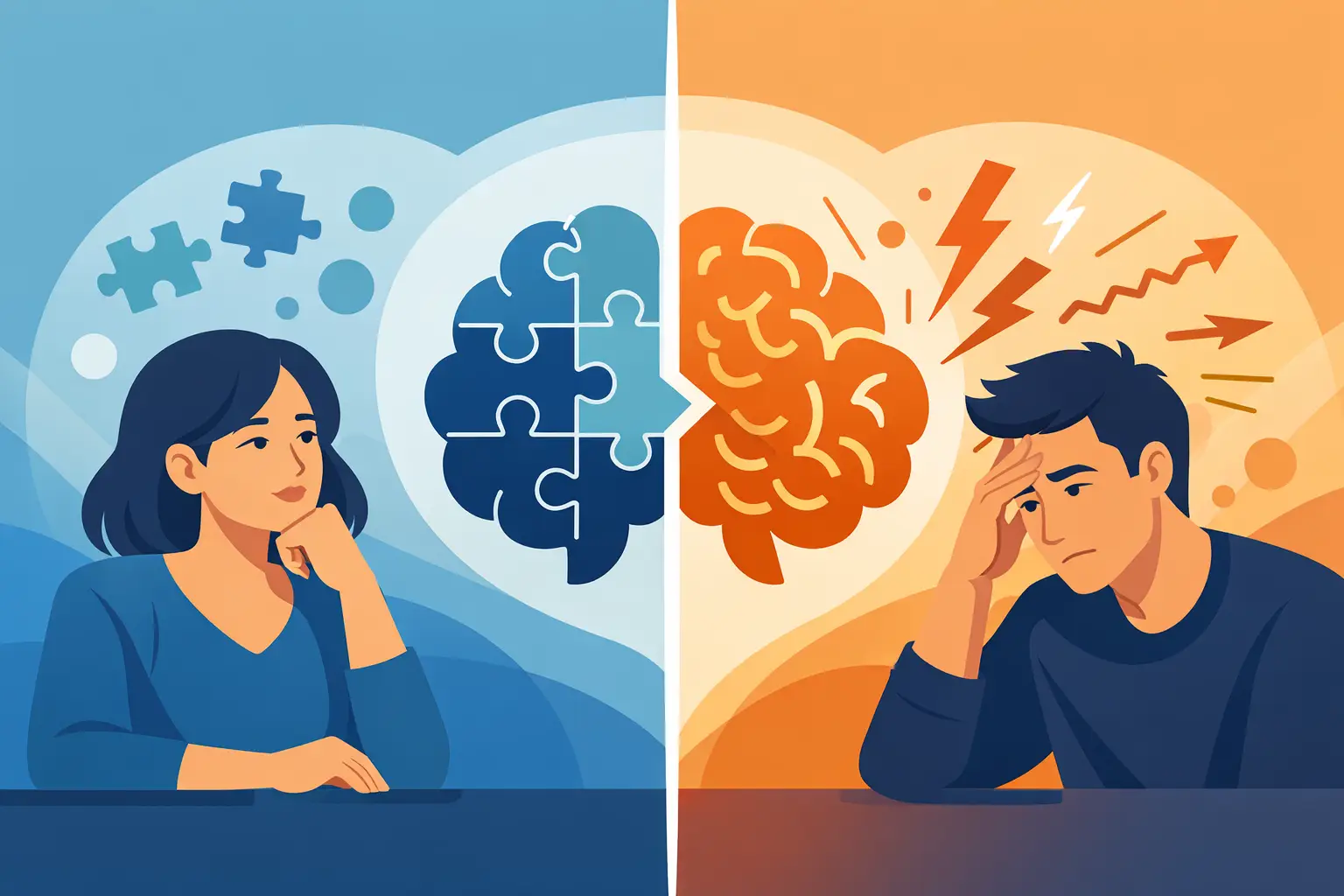
Yes. Autism and ADHD commonly co-occur, and recognising both can be relieving. An individual may crave structure while finding it difficult to maintain, want to complete a carefully planned task but become diverted, or need recovery time after social contact while also seeking stimulation and variety.
When both profiles are present, one set of traits can obscure the other. ADHD-driven spontaneity may make autistic needs for routine less visible. Autistic detail-focus may conceal ADHD-related planning difficulties. This is one reason a broad, individualised formulation matters more than relying on a checklist or a social media comparison alone.
It also matters because support may need to address more than one pattern. A calendar system might help with time awareness but become another source of pressure if it is overly complicated. Exposure to new situations may be useful for anxiety, but should not be used to dismiss genuine sensory needs. Effective care balances skill-building with self-understanding and reasonable environmental adjustments.
The role of anxiety, trauma, sleep and burnout
Anxiety can resemble both autism and ADHD. A highly anxious person may avoid social situations, struggle to concentrate, become restless or feel overwhelmed by small demands. Trauma can affect emotional regulation, memory, threat perception and relationships. Chronic sleep deprivation can reduce attention, patience and capacity to manage sensory input.
These factors do not rule out autism or ADHD. They may occur alongside either condition, and sometimes develop after years of unsupported neurodivergent experience. However, they deserve proper attention because treatment approaches differ. Improving sleep, reducing chronic stress and treating anxiety may significantly improve functioning, even when neurodevelopmental traits remain.
Burnout also warrants careful consideration. Neurodivergent burnout can involve profound exhaustion, reduced tolerance for demands, loss of skills that usually feel manageable, social withdrawal and increased sensory sensitivity. It is not a personal failure or a sign that someone is not trying hard enough. Often, it signals that the gap between daily demands and available capacity has become too large.
What a useful assessment and therapy process can offer
A formal assessment may be appropriate when a person wants diagnostic clarity, workplace or study adjustments, medication discussions for ADHD, or a clearer foundation for treatment. In Australia, assessment pathways vary. A GP can help discuss referral options, and diagnosis may involve a psychologist, psychiatrist or other suitably qualified clinician, depending on the purpose of the assessment and local service arrangements.
Therapy can still be helpful whether or not a formal diagnosis is pursued. A neuroaffirming, person-centred approach does not attempt to make someone appear less autistic or less ADHD. Instead, it helps identify patterns, reduce unnecessary distress and build practical supports around the person’s goals.
For an adult with ADHD, therapy may include strategies for task initiation, planning, emotional regulation, self-criticism and communication. For an autistic adult, it may focus on sensory regulation, boundaries, recovery from social demands, self-advocacy and managing change. Where anxiety or depression is present, approaches such as CBT, ACT and interpersonal therapy can be adapted so they are concrete, collaborative and responsive to the person’s processing style.
A holistic lens is also valuable. Attention and emotional regulation are influenced by sleep quality, movement, nutrition, workload, relationships, medication, substance use and the amount of quiet recovery built into the week. Lifestyle changes are not a substitute for clinical care or accommodations, but they can strengthen the brain and body’s capacity to cope with demands.
Questions worth bringing to therapy
If you are considering whether autism, ADHD or both may explain your experience, begin with specific examples rather than trying to prove a label. You might reflect on when these patterns first appeared, what situations drain or regulate you, how you manage work and relationships, and what strategies you use to keep going.
It can also help to notice the cost of coping. Are routines supportive, or are they becoming rigid because everything feels fragile? Does concentration improve with urgency, interest or movement? Do you avoid certain environments because they are socially difficult, sensory overwhelming or both? These details allow therapy to move beyond broad descriptions and towards practical, individualised support.
You do not need to have every answer before seeking help. The most useful next step is often a conversation that treats your experience with curiosity, clinical care and respect. With the right support, understanding your neurotype can become less about explaining the past and more about creating a life that fits you better.