
If you’ve ever sat in my office: or "the workshop," as I like to call it: you’ve probably expressed a familiar frustration: "Steve, I know what I’m supposed to do. I just can’t seem to do it."
You’ve read the books, bought the gym membership, and cleared the pantry of processed junk. Yet, three weeks later, the old habits have crept back in, and you’re back to square one, feeling like a faulty engine that refuses to turn over. As a "Chief Brain Mechanic," I’m here to tell you that it’s likely not a lack of willpower. It’s a design mismatch.
This article unpacks the biological and environmental reasons why standard lifestyle advice often fails and explains how our ARCHR²™ framework moves beyond "trying harder" to actually "rewiring" the system. We will explore the "Convenience Trap," the concept of "Evolving to be Disrupted," and why the R² (Rewire and Repatterning) phase of our methodology is the professional tune-up required to make healthy habits stick for good.
Evolving to be Disrupted: The Biological Mismatch
The human brain is a piece of ancient hardware trying to run a hyper-modern operating system. For hundreds of thousands of years, our survival depended on "natural buffers": physical movement to find food, sunlight to regulate our circadian rhythms, and deep, face-to-face social connection for safety.
In the modern world, we have effectively engineered those buffers out of our lives. We call this "dislocation." As explored in our deep dive into disrupted search and psychopathology, we are essentially living in a world our brains weren't built for.
When we remove these natural buffers, the brain doesn’t just relax; it enters a state of "internal alarm." It assumes that if we aren’t moving, seeing the sun, or connecting with our tribe, something must be horribly wrong. This puts the nervous system into a chronic survival mode, making it nearly impossible to focus on "thriving" or making long-term lifestyle changes.

The Convenience Trap: Why "Easy" is Making Your Brain Work Harder
We are told that convenience is the ultimate goal. Delivery apps, remote work, and endless scrolling are designed to save us effort. However, this is the "Convenience Trap."
The brain requires a certain amount of "healthy friction" to function optimally. When we remove the effort required to obtain food, information, or social interaction, we bypass the very reward pathways (dopamine and serotonin) that keep our "engine" running smoothly.
Instead of the steady hum of a well-tuned motor, we get the erratic sparks of a short circuit. This convenience-driven disruption creates:
- Cognitive Fragmentation: Our attention is pulled in a thousand directions by "nudges" and notifications.
- Dopamine Desensitization: Constant easy hits of dopamine make regular, healthy activities (like a walk or reading a book) feel boring or painful.
- The Survival Loop: The brain stays stuck in a high-alert state, prioritizing immediate gratification over long-term health.
Why "Just Do It" Doesn't Work for a Misfiring Brain
Most lifestyle advice follows a "top-down" approach. It assumes that if you just give the "driver" (your conscious mind) enough information, they can steer the "car" (your brain and body) wherever they want.
But if the engine is misfiring and the steering rack is bent, it doesn't matter how good the driver is. This is why "just eating better" or "just exercising" fails for people in a state of chronic stress or neuro-disruption. When your brain is in survival mode, it views "change" as a threat. It wants to stick to what is known and safe: even if what is known is a bag of chips and three hours of Netflix.
The Survival vs. Performance Spectrum
| Feature | Survival Mode (The "Misfiring" Brain) | Performance Mode (The "Tuned" Brain) |
|---|---|---|
| Primary Goal | Conservation of energy / Avoiding threat | Growth, connection, and exploration |
| Brain Region | Amygdala-dominant (Lower brain) | Prefrontal Cortex-dominant (Higher brain) |
| Response to Change | Resistance, anxiety, and procrastination | Curiosity, discipline, and adaptability |
| Reward Seeking | Immediate (Sugar, scrolling, stimulants) | Delayed (Long-term health, mastery) |
| Habit Formation | Rigid and reactive | Flexible and intentional |
To move from the left column to the right, you can't just wish it. You need a mechanical intervention. This is where the ARCHR²™ framework comes in.
Introducing ARCHR²™: The R² (Rewire and Repatterning) Phase
At Keystone Therapy, we don't just talk about your problems; we look under the hood to see how the system is functioning. Our ARCHR²™ framework is designed to provide a comprehensive overhaul. While the first phases of the framework focus on Assessment and Regulation, the R² (Rewire and Repatterning) phase is where the lasting change happens.
1. Rewiring (The Structural Work)
Rewiring is about neuroplasticity. We use clinical techniques, including Neuro-Counselling and Mind-Body Integration, to help the brain build new pathways. We aren't just changing your thoughts; we are helping the brain "re-route" its electrical signals so that the "Performance Mode" becomes the default setting.
2. Repatterning (The Functional Work)
Repatterning is the process of building new "manuals" for your daily life. It involves identifying the "convenience traps" and consciously reintroducing the "natural buffers" your brain craves. This is where we look at things like Interpersonal Social Rhythm Therapy (IPSRT) to sync your biological clock and stabilize your mood.
Why the "Brain Mechanic" Approach is Different
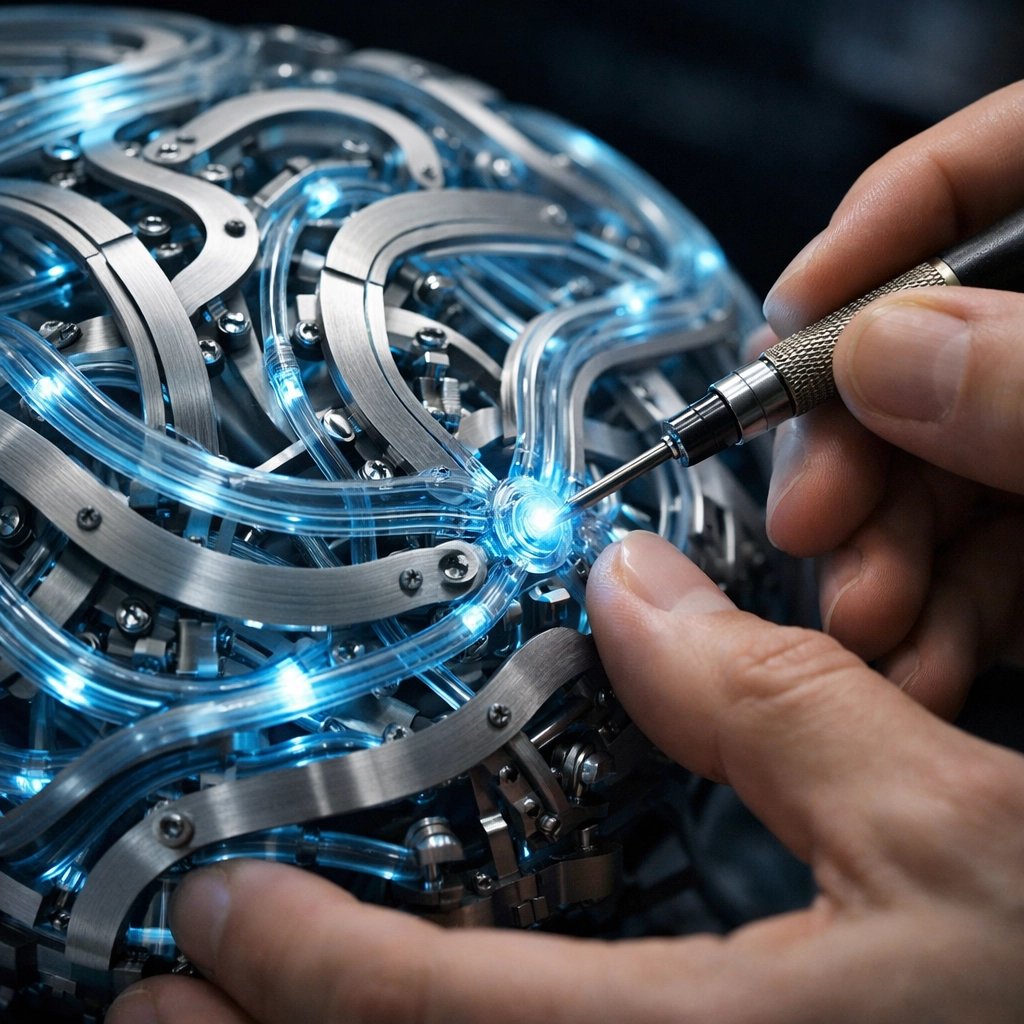
As your Chief Brain Mechanic, I don't see therapy as just "talking." I see it as a workshop for your mind. If you come in with a "check engine" light on, we don't just clear the code; we find out why it’s throwing the error.
Our approach addresses the three pillars of a well-tuned brain:
- Biology: Addressing sleep, nutrition, and neuro-regulation.
- Environment: Identifying "dislocation" and "convenience traps" in your life.
- Patterns: Rewiring the deep-seated emotional responses that keep you stuck in survival mode.
Actionable Steps: Beginning the Repatterning Process
While a full "engine rebuild" often requires professional help, you can begin to identify the "rust" in your system by auditing your natural buffers:
- Audit Your Sunlight: Are you getting 10-20 minutes of natural light within an hour of waking? This is the "spark plug" for your circadian rhythm.
- Identify the Convenience Traps: Which "easy" behaviors are actually making your life harder? Is it the 2 AM scroll? The reliance on UberEats? Pick one to "add friction" to.
- Assess Movement: Movement isn't just about weight loss; it’s about signaling to your brain that you are safe and capable.
- Check Your Tribe: Are you having face-to-face interactions, or is all your connection mediated through a screen? The brain needs the "chemical handshake" of real human contact.
Moving Beyond the "Internal Alarm"
The reason your lifestyle changes haven’t stuck in the past isn't because you are broken; it’s because you’ve been trying to drive a high-performance car with a clogged fuel line and a broken GPS. By acknowledging that we have "evolved to be disrupted," we can stop the cycle of shame and start the process of repair.
True change requires moving the brain out of its "survival loop" and into its "growth loop." This is the core of our mission at Keystone Therapy. Whether you are dealing with ADHD, chronic stress, or just a general sense that your "engine" isn't performing like it should, a structured approach to rewiring is the only way to make the new patterns hold.

Getting Under the Hood
If you’re ready to stop the endless cycle of "starting over" and want to engage in a professional tune-up, it’s time to look at the wiring. Lifestyle changes don't stick because of willpower; they stick because the brain has been properly prepared and repatterned to support them.
You can learn more about our specific approach to these challenges on our news page or by exploring our resources. When you're ready to put the car on the hoist and see what's actually going on, book a session with us.
Let's get that engine running the way it was designed to.
Clinical Note: The ARCHR²™ framework is a proprietary clinical methodology used at Keystone Therapy. While self-help strategies are valuable, individuals experiencing significant psychopathology or chronic mental health conditions should seek professional guidance from a qualified therapist to ensure interventions are safely and effectively implemented.