


When most people think about trauma therapy, they imagine talking about difficult experiences from the past. While that's part of the picture, effective trauma treatment requires something more fundamental: understanding and repairing what trauma does to your nervous system.
Trauma isn't just a psychological experience stored in memories. It's a physiological event that rewires your brain's threat detection systems, stress responses, and emotional regulation capacity. This article unpacks how trauma affects the nervous system at a hardware level, why traditional talk therapy alone often falls short, and how the A.R.C.H.™ Framework provides a structured pathway for nervous system trauma recovery.
Why Trauma Is More Than a Psychological Experience
Here's what actually happens when you experience trauma: Your brain activates survival responses designed to keep you alive during overwhelming threat. Fight, flight, freeze, or shutdown responses kick in automatically, flooding your system with stress hormones and redirecting all available resources toward immediate survival.
This is brilliant engineering when you're facing actual danger. The problem emerges when these survival responses don't switch off after the threat passes. For many people experiencing trauma, the nervous system becomes stuck in a chronic state of threat detection, treating everyday stressors as life-or-death situations.
This explains why trauma survivors often report symptoms that seem disproportionate to current circumstances: anxiety that feels uncontrollable, emotional overwhelm triggered by seemingly minor events, dissociation or numbness, difficulty trusting others, hypervigilance, or complete emotional shutdown. These aren't character flaws or psychological weaknesses. They're predictable nervous system responses to past overwhelming experiences.
The research confirms this physiological reality. Trauma significantly impacts the amygdala (your brain's threat detection center), causing it to become hypersensitive and treat neutral situations as potential dangers. Simultaneously, stress hormones like cortisol and adrenaline flood your system, keeping your sympathetic nervous system in overdrive long after the traumatic event ends. Brain regions responsible for emotional regulation and memory processing (the hippocampus and prefrontal cortex) show measurable structural changes following trauma.
This is hardware damage, not just software glitches. And it requires a treatment approach that addresses both.

Understanding Nervous System Trauma Responses: The Three-Brain Model
To understand trauma healing, you need to understand how your brain processes threat through three interconnected systems:
The Survival Brain (Brainstem and Autonomic Nervous System)
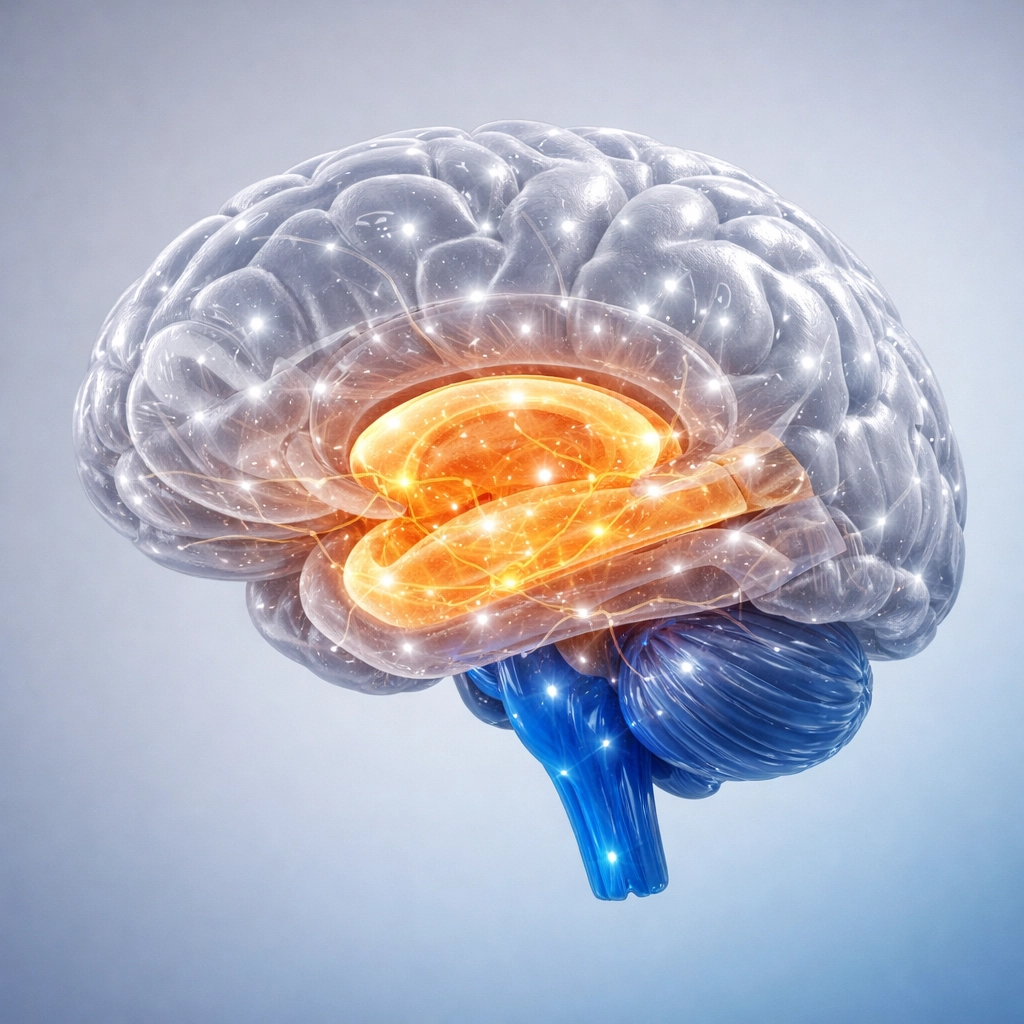
This is your most primitive neural system, operating entirely outside conscious awareness. The survival brain activates rapid, automatic responses to danger: heart rate increases, breathing accelerates, muscles tense, digestion stops, and your system mobilizes for action. This happens in milliseconds, well before conscious thought kicks in.
After trauma, the survival brain can become hypersensitive, activating threat responses to stimuli that aren't actually dangerous. This creates chronic nervous system dysregulation, where your body constantly runs stress responses even when you're objectively safe.
The Emotional Brain (Limbic System)
Your limbic system, particularly the amygdala and hippocampus, stores emotional memories and generates predictions about future threats based on past experiences. This system learns: "When X happened, I was in danger. Therefore, anything resembling X means danger."
Trauma creates particularly strong emotional memories that get stored without proper context or timestamp. Your emotional brain may react to current situations as if the original trauma is happening right now, generating fear responses that feel overwhelming and irrational.
The Thinking Brain (Cortex)
Your cortex handles reasoning, decision-making, language, and impulse control. This is where conscious thought, planning, and self-reflection occur. Ideally, your thinking brain maintains executive control, regulating emotional responses and making thoughtful decisions about how to respond to challenges.
Trauma disrupts this hierarchy. When your survival or emotional brain perceives threat, it essentially hijacks your thinking brain, shutting down your capacity for rational thought and intentional response. This is why many trauma survivors report feeling "out of control" during triggering situations: their thinking brain goes offline while survival systems take over.
Why Regulation (Not Just Talking) Is Central to Trauma Recovery
Traditional talk therapy operates primarily at the thinking brain level. You discuss experiences, explore thought patterns, develop insights, and work through cognitive distortions. This approach can be valuable, but it has a fundamental limitation: you can't think your way out of a nervous system problem.
When your survival brain detects threat and activates fight-flight-freeze responses, rational thought won't deactivate those systems. Your amygdala doesn't care about your CBT homework or your intellectual understanding of why you shouldn't feel anxious. It's responding to learned threat associations stored at a physiological level.
Effective trauma therapy must address nervous system regulation before, during, and alongside cognitive processing work. This means helping individuals:
- Recognise early signs of nervous system activation before full dysregulation occurs
- Develop practical grounding and regulation skills that work at a physiological level
- Expand their window of tolerance for uncomfortable emotions and sensations
- Safely process traumatic material without overwhelming their nervous system capacity
- Build new neural pathways that support flexible, adaptive responses to stress
This is where the A.R.C.H.™ Framework becomes particularly valuable.
Introducing the A.R.C.H.™ Framework: A Structured Approach to Trauma Healing
The A.R.C.H.™ Framework is a neuroscience-informed trauma treatment model designed specifically to support nervous system repatterning and emotional integration. It recognizes that trauma recovery follows a predictable sequence, and attempting advanced healing work before establishing foundational stability typically backfires.
The model progresses through four key stages:
Anchor: Creating Stability and Safety
Before any trauma processing can occur, you need a stable foundation. The Anchor stage focuses on:
- Developing body awareness and grounding skills that help you recognize nervous system states and return to present-moment safety
- Building regulation capacity through breathwork, somatic practices, and nervous system co-regulation
- Reducing chronic stress activation that keeps your survival brain in constant high alert
- Establishing therapeutic safety so your nervous system can begin trusting the healing process
- Creating external stability in daily life through sleep hygiene, routine, and environmental safety
This stage addresses the hardware problem directly: helping your survival brain recognize that you're no longer in danger. Without this foundation, trauma processing often retraumatizes rather than heals.
Regulate: Expanding Emotional Flexibility
Once basic stability exists, the Regulate stage builds capacity to manage distress without complete dysregulation:
- Identifying personal triggers and early warning signs of nervous system activation
- Developing a personalized regulation toolkit with multiple strategies for different situations
- Practicing remaining present during emotional discomfort rather than immediately dissociating or avoiding
- Building distress tolerance so uncomfortable emotions don't automatically trigger survival responses
- Expanding the window of tolerance for increasingly challenging material
This stage is about increasing your nervous system's flexibility: teaching it that you can experience difficult emotions without catastrophe. You're building the capacity to approach (rather than avoid) the work ahead.

Connect: Rebuilding Trust and Relationships
Trauma fundamentally disrupts attachment and relational safety. The Connect stage addresses:
- Understanding how trauma affects relationship patterns and attachment security
- Improving communication skills particularly around needs, boundaries, and vulnerability
- Repairing trust in both self and others
- Recognizing relational triggers and developing healthier response patterns
- Building secure connection through therapeutic relationship and practicing new relational behaviors
Many trauma survivors learned during the original trauma that other people are unsafe or unreliable. This stage actively reprograms those beliefs through corrective experiences of safety, attunement, and reliability in relationship.
Heal: Integrating Trauma and Supporting Long-Term Change
Only after establishing stability, regulation capacity, and relational safety does the framework move into direct trauma processing:
- Safely accessing traumatic memories with adequate nervous system support
- Processing experiences through multiple modalities including cognitive, emotional, somatic, and narrative approaches
- Integrating fragmented aspects of trauma memories so they become cohesive past events rather than present threats
- Developing flexible, adaptive responses to previously triggering situations
- Building meaning and post-traumatic growth that incorporates trauma into life narrative without being defined by it
This stage is where transformation occurs: replacing automatic threat responses with intentional, flexible responses that reflect current reality rather than past danger.
The Power of Repatterning: Retraining Your Nervous System
A core principle underlying the A.R.C.H.™ Framework is repatterning: the process of replacing automatic threat responses with safe, intentional responses through repeated corrective experiences.
Your nervous system learns through repetition. Trauma taught it: "This type of situation equals danger. Activate all defense systems immediately." Healing requires teaching it something new: "This situation resembles past danger, but I'm actually safe now. I can stay present, regulate my response, and choose how to act."
This isn't achieved through insight alone. Repatterning requires embodied experiences where:
- You encounter a trigger or challenging material in a therapeutic context
- Your nervous system begins activating stress responses as expected
- You apply regulation skills and experience successfully managing the activation
- Nothing catastrophic happens despite your survival brain's predictions
- Your nervous system updates its threat assessment based on this new data
Through repeated experiences of "triggered but regulated," your brain gradually learns that these situations don't require full survival responses. The amygdala becomes less reactive. The prefrontal cortex maintains better executive control. Stress hormones return to baseline more quickly. Your window of tolerance expands.
This is the hardware-software philosophy in action: using targeted behavioral interventions (software) to create measurable changes in brain structure and function (hardware). Neither approach alone is sufficient; integration creates lasting change.

Who Can Benefit From Nervous System-Focused Trauma Therapy?
The A.R.C.H.™ Framework and nervous system regulation approach benefit individuals experiencing:
- PTSD and trauma symptoms including flashbacks, nightmares, hypervigilance, and avoidance behaviors
- Complex trauma (C-PTSD) from prolonged or repeated traumatic experiences, particularly in childhood
- Anxiety disorders where chronic nervous system dysregulation maintains anxiety symptoms
- Chronic stress that has created persistent sympathetic nervous system activation
- Emotional dysregulation including intense emotional reactions, difficulty self-soothing, or emotional numbness
- Relationship difficulties rooted in attachment trauma or relational wounds
- Dissociation where disconnection from body, emotions, or present moment serves as trauma defense
- Physical symptoms without clear medical cause that reflect somatic manifestations of unprocessed trauma
This approach is particularly valuable for individuals who have tried traditional talk therapy without significant improvement. If you've spent years discussing your trauma without feeling meaningfully better, you likely need interventions that address nervous system regulation more directly.
Moving Toward Recovery: What Trauma Healing Actually Looks Like
Trauma recovery doesn't mean erasing traumatic memories or returning to who you were before trauma occurred. Healing means:
- Retraining your nervous system to respond flexibly rather than reactively to stress
- Integrating traumatic experiences into your life narrative without being controlled by them
- Expanding your window of tolerance so you can experience the full range of emotions without dysregulation
- Rebuilding trust in yourself, your body, and selected others
- Developing resilience that incorporates trauma as part of your story, not the defining feature
Recovery is rarely linear. You'll have sessions where everything clicks and periods where old patterns resurface. This is normal and expected: your nervous system is learning new patterns, which takes time and repetition. Progress often looks like: getting triggered but recovering more quickly, noticing activation earlier and intervening sooner, choosing different responses to familiar situations, or feeling safe in contexts that previously felt threatening.
The A.R.C.H.™ Framework provides structure for this nonlinear process, ensuring you're building necessary foundations before advancing to more challenging work.
Seeking Support for Trauma and Nervous System Regulation
If you're experiencing symptoms related to trauma or emotional dysregulation, working with a trauma-informed therapist trained in nervous system regulation can help you develop the stability, resilience, and healing capacity for meaningful recovery.
At Keystone Therapy, we specialize in neuroscience-informed approaches to trauma healing, including nervous system regulation, somatic interventions, and the A.R.C.H.™ Framework. Our Chief Brain Mechanic, Steve Halls, brings both clinical psychotherapy credentials and Certified Neuroscience Coach training to trauma work, addressing both the psychological and physiological impacts of overwhelming experiences.
We offer trauma therapy services both in-person in Perth and via telehealth throughout Australia, ensuring access to specialized support regardless of location.
Your nervous system learned to protect you through survival responses that made sense during trauma. Recovery involves teaching it that you're safe now and helping it develop more flexible, adaptive responses to current life. This is possible, and you don't have to navigate it alone.
Contact Keystone Therapy to schedule an initial consultation, or explore our Mind-Body Integration services to learn more about our trauma-informed therapeutic approaches.
Your nervous system can learn new patterns. Let's help it remember what safety feels like.